



Indicators suggesting an infant experiences thermal discomfort due to a lower-than-ideal ambient temperature during sleep are crucial for maintaining the child’s well-being. These manifestations may include specific behavioral and physiological responses exhibited while the infant is asleep. For example, an infant might display increased physical activity or changes in skin temperature as a response to feeling cold.
Recognizing these indicators is essential for preventing potential health risks associated with hypothermia in infants. Early identification and appropriate intervention, such as adjusting the sleeping environment or adding layers of clothing, can promote a stable and safe sleep environment. Historically, caregivers have relied on observation and tactile assessment to gauge an infant’s thermal comfort, underscoring the enduring relevance of these methods.
Therefore, understanding the nuances of an infant’s physiological and behavioral reactions to cold exposure is vital for ensuring optimal sleep conditions. The following sections will delve into specific observable cues and practical strategies for maintaining a comfortable sleep temperature for infants.
Recognizing Cold Indicators in Sleeping Infants
Effective strategies for identifying potential cold exposure in sleeping infants are critical for maintaining their thermal comfort and overall health. Diligent observation and proactive adjustments to the sleep environment can significantly mitigate risks associated with feeling cold.
Tip 1: Observe Skin Temperature: Assess the infant’s skin, particularly the neck and chest. Cold skin to the touch in these areas may suggest the need for additional warmth.
Tip 2: Monitor Activity Levels: Increased restlessness or unusual movements during sleep could be indicative of the infant’s attempt to generate heat.
Tip 3: Note Changes in Breathing: While subtle, observe if the infant’s breathing pattern appears labored or irregular. This may be an involuntary physiological response to feeling cold.
Tip 4: Check Extremities: While hands and feet may naturally feel cooler, persistently cold extremities, especially if accompanied by other indicators, warrant attention.
Tip 5: Evaluate Environmental Factors: Consider the room temperature and the type of sleepwear the infant is using. Adjust these factors accordingly to ensure a comfortable thermal environment.
Tip 6: Consider Behavioral Cues: Pay attention to specific facial expressions or body postures that may signal discomfort, such as a furrowed brow or curled-up position.
Tip 7: Avoid Overheating: While addressing potential cold exposure, it is also crucial to prevent overheating. Use breathable fabrics and avoid excessive layering of clothing or blankets.
By diligently observing these indicators and making appropriate adjustments, caregivers can effectively maintain an optimal thermal environment for sleeping infants, contributing to their overall well-being and promoting restful sleep.
The final section will provide information on maintaining a comfortable sleep environment.
1. Restlessness

Restlessness, characterized by increased movement and disturbed sleep patterns, serves as a significant indicator of potential thermal discomfort in sleeping infants. When an infant experiences a drop in body temperature, physiological mechanisms activate to generate heat. This increased metabolic activity can manifest as heightened physical activity, disrupting the infant’s sleep cycle and leading to observable restlessness. For example, an infant sleeping in a room with a consistently low temperature might exhibit frequent tossing and turning, leg movements, or arm flailing, disrupting what would otherwise be a state of calm repose.
The importance of recognizing restlessness lies in its potential to signal early-stage cold exposure before more severe symptoms develop. Observing increased movement patterns in conjunction with other indicators, such as cool skin temperature or changes in breathing, provides a more comprehensive assessment of the infant’s thermal state. A practical application of this understanding involves caregivers regularly monitoring infants sleeping patterns, especially in colder environments or during seasonal transitions. Noticing a sudden increase in restlessness prompts a review of the sleeping environment, clothing, and room temperature, facilitating timely adjustments to mitigate potential cold exposure. However, restlessness alone may not definitively indicate cold, as it can also be caused by hunger, discomfort, or developmental milestones.
In conclusion, restlessness functions as an important, albeit not definitive, early warning sign of potential cold in sleeping infants. Vigilant observation, coupled with an understanding of other relevant indicators, is essential for accurate assessment and proactive intervention. One challenge is distinguishing restlessness caused by thermal discomfort from other potential causes. By integrating this understanding into routine care practices, caregivers can promote a more stable and comfortable sleep environment for infants, thereby contributing to their overall well-being.
2. Cool Skin
Cool skin serves as a tangible indicator in the assessment of an infant’s thermal comfort during sleep. It reflects a physiological response to a lower ambient temperature or inadequate insulation. Careful evaluation of skin temperature, in conjunction with other signs, is crucial in determining whether an infant experiences thermal distress.
- Mechanism of Heat Loss
When an infant’s core body temperature begins to decrease, the body initiates a process known as vasoconstriction. This involves narrowing the blood vessels near the skin’s surface, reducing blood flow to the extremities and skin. The purpose is to conserve heat by minimizing heat loss through the skin. Consequently, the skin’s surface becomes cooler to the touch. This mechanism is particularly pronounced in infants due to their higher surface area-to-volume ratio, which makes them more susceptible to heat loss than adults.
- Areas for Assessment
While hands and feet might naturally feel cooler to the touch, the core areas like the chest, back, and nape of the neck are more reliable indicators of an infant’s overall thermal state. These central areas should feel comfortably warm. If these regions feel cool, it suggests the infant’s core temperature might be dropping, warranting further investigation and potential intervention.
- Influence of Environmental Factors
The perceived coolness of an infant’s skin is directly influenced by the surrounding environment. If the room temperature is low, or if the infant is inadequately dressed, the skin is more likely to feel cool. Conversely, excessively warm environments or over-bundling can lead to overheating, which presents its own set of risks. Therefore, assessing skin temperature should always be contextualized by the ambient conditions and the type of sleepwear used.
- Limitations and Combined Assessment
While cool skin can be a valuable indicator, it is not definitive on its own. Other factors, such as circulatory issues or individual metabolic differences, can affect skin temperature. It is crucial to consider cool skin in conjunction with other signs, such as restlessness, changes in breathing, or behavioral cues, to obtain a more accurate assessment of the infant’s thermal comfort. Relying solely on skin temperature without considering other factors can lead to misinterpretations and potentially inappropriate responses.
The assessment of cool skin provides a critical piece of the puzzle in determining whether a sleeping infant is experiencing cold. Understanding the underlying physiological mechanisms and environmental influences allows for a more informed and nuanced evaluation, ultimately contributing to a safer and more comfortable sleep environment.
3. Breathing Changes

Alterations in an infant’s respiratory pattern during sleep can serve as crucial indicators of cold exposure. Hypothermia, or a drop in core body temperature, elicits a physiological response that can directly impact respiration. The initial response to cold stress involves an increase in metabolic rate to generate heat. This heightened metabolism necessitates increased oxygen consumption, potentially leading to a faster respiratory rate. Conversely, in more severe cases of hypothermia, the infant’s central nervous system function may become depressed, resulting in slow or shallow breathing. For example, a previously healthy infant sleeping in a cold room may exhibit rapid, shallow breaths as the body attempts to compensate for the heat loss and maintain core temperature. Alternatively, prolonged exposure could lead to a significantly reduced respiratory rate, signaling a more critical state.
The ability to discern subtle shifts in an infant’s breathing pattern requires attentive observation. Caregivers should be aware of the infant’s baseline respiratory rate when the infant is in a comfortable thermal environment. Deviations from this baseline, such as increased effort with each breath (manifesting as nasal flaring or chest retractions) or noticeable irregularities in the rhythm, warrant immediate attention. It is important to differentiate between normal periodic breathing, characterized by brief pauses, and sustained, shallow breathing suggestive of hypothermia. In practice, regular monitoring of an infant’s breathing during sleep, especially in potentially cold environments, allows for prompt identification of breathing changes and subsequent corrective actions like increasing room temperature or adding layers of clothing. Such actions can prevent further decline and potential complications.
In summary, breathing changes are a significant, albeit nuanced, component of the “signs baby is cold while sleeping.” The response is complex, encompassing both accelerated and depressed respiratory patterns depending on the severity and duration of cold exposure. Accurate interpretation requires vigilant observation, comparison to the infant’s normal breathing pattern, and consideration of other signs and symptoms. Challenges include differentiating normal variations in infant breathing from pathological changes due to cold stress. Integration of this knowledge into routine infant care enables timely intervention and contributes to a safer sleep environment. Therefore, the relationship is critical to be explored.
4. Posture

Postural adjustments exhibited by a sleeping infant can serve as an indicator of thermal discomfort, specifically when the infant is experiencing cold. The body’s instinctive responses to maintain core temperature can manifest in observable changes in posture, offering valuable insights into the infant’s thermal state.
- Fetal Position
One common postural adaptation is the adoption of a fetal position: drawing the limbs close to the torso. This posture minimizes surface area exposed to the cooler environment, reducing radiative heat loss. For instance, an infant might curl up on their side with knees drawn towards their chest, effectively conserving heat and minimizing exposure to the surrounding cold air. This behavior signifies the body’s attempt to reduce heat loss and maintain a stable internal temperature. It also suggests the body is actively trying to prevent further heat from escaping to the environment.
- Tucked Chin
Another subtle postural change is tucking the chin towards the chest. This posture aims to reduce heat loss from the head and neck region. Infants lose a significant amount of heat through their heads due to the relatively large surface area. By tucking the chin, the infant reduces the exposure of the neck, thereby conserving heat. It can be seen as a subtle cue that the infant is feeling the temperature drop, and their body is reacting accordingly.
- Stiff or Tense Limbs
Involuntary muscle tension can also influence posture. Cold exposure may lead to shivering, which causes muscles to contract rapidly to generate heat. Even without visible shivering, the infant may exhibit increased muscle tone, resulting in stiff or tense limbs. This can manifest as a rigid posture, where the infant’s limbs appear less relaxed than usual. Such tension in the limbs may also indicate discomfort.
- Resistance to Uncovering
An infant may resist being uncovered or having blankets removed, indicating a preference for warmth. This behavior demonstrates a conscious or subconscious awareness of the need to maintain thermal comfort. Resistance to positional changes which expose more skin may also be displayed.
These postural adaptations collectively underscore the body’s efforts to combat cold exposure during sleep. Recognizing these subtle cues, in conjunction with other indicators, aids caregivers in accurately assessing an infant’s thermal state and implementing necessary interventions to ensure a comfortable and safe sleep environment. It is important to carefully examine these actions as potentially signifying feeling too cold.
5. Lethargy

Lethargy, characterized by decreased alertness and responsiveness, represents a significant and concerning indicator within the constellation of “signs baby is cold while sleeping.” Its presence suggests a more advanced stage of hypothermia, requiring prompt evaluation and intervention.
- Depressed Central Nervous System Function
Hypothermia can depress the central nervous system, leading to a noticeable decrease in an infant’s level of consciousness. Normal responsiveness to stimuli diminishes, and the infant may appear unusually sleepy or difficult to arouse. This differs from typical infant sleep patterns, characterized by periods of active and quiet sleep. The reduced neurological function directly impacts alertness and general responsiveness, serving as a strong indicator of a more severe physiological state.
- Reduced Muscle Tone and Activity
As body temperature decreases, muscle function can become impaired, contributing to a reduction in overall activity. An infant exhibiting lethargy may display decreased muscle tone, appearing “floppy” or limp when held. This contrasts with the usual level of motor activity expected at the infant’s age and stage of development. Spontaneous movements, such as kicking or arm waving, may be less frequent or completely absent. This reduced muscle function compromises an infant’s ability to generate heat through movement, further exacerbating hypothermia.
- Feeding Difficulties
Lethargy can significantly impact an infant’s ability to feed effectively. Reduced alertness and muscle weakness can interfere with the suckling, swallowing, and breathing coordination necessary for successful feeding. An infant may exhibit a weak or absent suck, tire easily during feeding, or struggle to maintain latch. This compromised feeding ability can further weaken the infant and hinder their ability to generate heat through metabolic processes.
- Decreased Physiological Response to Stimuli
Hypothermic infants may exhibit a blunted response to stimuli that would normally elicit a reaction. Painful stimuli, such as a needle prick, or environmental stimuli, such as loud noises, may provoke a weaker or delayed response. This lack of responsiveness reflects the suppressed neurological function associated with hypothermia and indicates a serious compromise in the infant’s physiological state.
The presence of lethargy, in conjunction with other signs such as cool skin, breathing changes, and postural adjustments, warrants immediate medical attention. Its appearance signals a more advanced stage of hypothermia, where the infant’s physiological mechanisms are struggling to maintain homeostasis. Prompt intervention, including warming measures and medical support, is crucial to prevent potentially severe complications and ensure the infant’s recovery.
6. Extremities

The temperature of an infant’s extremities, namely the hands and feet, provides a valuable, though not definitive, indicator when assessing whether the infant is experiencing cold during sleep. While extremities naturally tend to be cooler than the core body temperature, a persistently cold state, particularly when accompanied by other concerning signs, warrants careful consideration.
- Vasoconstriction and Peripheral Cooling
The body’s physiological response to a decrease in ambient temperature involves vasoconstriction, the narrowing of blood vessels in the extremities. This reduces blood flow to the hands and feet, conserving heat for the vital organs. As a result, the extremities cool more rapidly than the core body. This is a protective mechanism, but overly cold extremities can indicate that the body is working harder to maintain core temperature. The degree to which vasoconstriction occurs and the subsequent cooling of extremities are dependent on the duration and severity of the cold exposure, as well as the individual infant’s physiological response.
- Capillary Refill Time
Capillary refill time, the time it takes for blood to return to the capillaries after pressure is applied, can provide insight into peripheral circulation. A prolonged capillary refill time in the extremities, exceeding two to three seconds, may indicate reduced blood flow due to vasoconstriction. To assess capillary refill, gently press on the infant’s fingertip or toe pad until it blanches, then release. Observe the time it takes for the color to return. A delayed refill, in conjunction with cold extremities, can strengthen the suspicion of cold exposure. However, this test must be performed with care, as excessive pressure can distort the results.
- Color Changes
The color of the extremities can also offer clues. Pale or mottled skin on the hands and feet suggests reduced blood flow. In extreme cases, cyanosis, a bluish discoloration, may be observed, indicating a critical lack of oxygen in the peripheral tissues. While occasional and transient color changes can be normal, persistent pallor or cyanosis, particularly when the infant is otherwise showing signs of cold stress, is a concerning finding and requires prompt action. This is a late sign and requires immediate medical attention.
- Limitations of Extremity Temperature as an Indicator
It’s crucial to acknowledge that extremity temperature alone is not a reliable determinant of overall thermal comfort. Hands and feet can feel cool to the touch even when the infant’s core temperature is within a normal range. External factors such as ambient temperature, clothing, and activity levels significantly influence peripheral temperature. Additionally, individual variations in circulation and metabolic rate can impact the temperature of the extremities. A comprehensive assessment involves considering extremity temperature alongside other signs of cold stress, such as restlessness, breathing changes, and core body temperature, to gain a more accurate picture of the infant’s thermal state.
In summary, while assessing the temperature of an infant’s extremities can contribute to evaluating potential cold exposure during sleep, it must be interpreted within a broader clinical context. A persistently cold state, especially when associated with other signs of cold stress, warrants further investigation and appropriate warming measures. A more comprehensive approach to assessing signs baby is cold while sleeping involves considering all indicators, including extremity temperature, in conjunction with ambient conditions and the infants overall well-being.
Frequently Asked Questions
This section addresses common inquiries regarding the identification and management of cold exposure in sleeping infants. Accurate information is crucial for ensuring infant safety and well-being.
Question 1: How can one differentiate between naturally cool extremities and cold extremities indicating thermal distress?
Extremities often feel cooler to the touch compared to the core body temperature. Concerningly cold extremities, in contrast, persist despite adequate ambient temperature and appropriate clothing. Paleness or mottling of the skin, coupled with other symptoms, is also indicative.
Question 2: What constitutes an appropriate room temperature for an infant’s sleep environment?
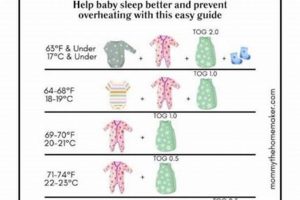
The recommended room temperature typically ranges between 68 to 72 degrees Fahrenheit (20 to 22 degrees Celsius). A consistent and stable temperature within this range contributes to a safe and comfortable sleep environment.
Question 3: How many layers of clothing are generally advisable for a sleeping infant to prevent cold exposure?
Generally, dressing the infant in one more layer than what an adult would find comfortable in the same environment is advisable. Overheating, however, must be avoided.
Question 4: Is it safe to use blankets in an infant’s crib to provide warmth?
Loose blankets pose a suffocation risk and are generally not recommended for infants. Wearable blankets or sleep sacks provide a safer alternative for maintaining warmth during sleep.
Question 5: What initial steps should be taken upon suspecting an infant is experiencing cold exposure during sleep?
First, assess the infant’s core temperature and overall condition. Increase the room temperature, add an additional layer of clothing, and provide a warm (not hot) compress. If symptoms persist or worsen, seek immediate medical attention.
Question 6: How does prematurity affect an infant’s susceptibility to cold exposure during sleep?
Premature infants possess less subcutaneous fat and immature thermoregulatory systems, making them more vulnerable to cold exposure. Meticulous monitoring and careful management of the sleep environment are paramount.
Recognizing and addressing potential cold exposure in sleeping infants requires diligent observation and informed decision-making. Prompt intervention can significantly mitigate risks and ensure optimal well-being.
The subsequent section will provide a comprehensive summary of key points discussed throughout this article.
Signs Baby Is Cold While Sleeping
This exploration has detailed observable indicators suggestive of thermal discomfort in sleeping infants. Key signs include restlessness, cool skin, changes in breathing patterns, postural adjustments, lethargy, and persistently cold extremities. Vigilant observation of these indicators, combined with awareness of individual infant vulnerabilities and environmental factors, facilitates accurate assessment. Each sign warrants careful evaluation, recognizing that no single symptom definitively confirms cold exposure. A holistic approach, considering multiple factors, is essential for informed decision-making.
The responsibility for ensuring infant thermal comfort rests with caregivers and healthcare providers. A proactive approach, encompassing proper sleep environment management and continuous monitoring, is paramount. Early detection and intervention minimize potential health risks associated with hypothermia. Consistent application of the knowledge detailed herein contributes to a safer and healthier sleep environment for all infants.




![Baby Sleepwear: What Should Baby Wear to Sleep? [Guide] | Baby Care 101: Essential Tips for Happy, Healthy Babies](https://singlebabies.com/wp-content/uploads/2026/04/th-491-300x200.jpg "Baby Sleepwear: What Should Baby Wear to Sleep? [Guide] Baby Care 101: Essential Tips for Happy, Healthy Babies")