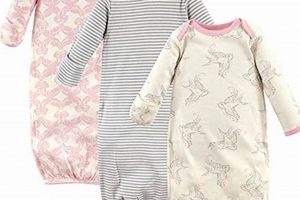
A specialized garment designed to provide a safe and comfortable sleep environment for infants. This wearable blanket alternative aims to eliminate the need for loose blankets in the crib, addressing a significant safety concern. It typically features a zipper closure for easy on and off and is constructed from breathable materials like cotton or muslin.
The utilization of such a sleep aid offers several advantages. It promotes consistent temperature regulation, reducing the risk of overheating or chilling. The design often restricts movement, which can help soothe infants and encourage longer sleep periods. Historically, concerns about Sudden Infant Death Syndrome (SIDS) have driven the development and adoption of products designed to minimize suffocation risks associated with traditional bedding.
The subsequent discussion will delve into specific features, materials, sizing considerations, and safety standards associated with these infant sleep garments. Further exploration will cover proper usage guidelines and maintenance instructions to ensure optimal performance and longevity.
Essential Usage Considerations
The following guidelines are intended to ensure safe and effective utilization of this sleep aid, promoting optimal infant comfort and security.
Tip 1: Select the Appropriate Size: Accurate sizing is crucial. Consult the manufacturer’s size chart based on the infant’s weight and height, not age. An ill-fitting garment can pose safety risks.
Tip 2: Maintain a Consistent Room Temperature: Regulate the nursery temperature to a comfortable range (typically 68-72F or 20-22C). Adjust the infant’s clothing layers accordingly to prevent overheating or chilling.
Tip 3: Ensure Proper Closure: Verify that all zippers or fasteners are securely closed before placing the infant in the crib. Loose components can present a choking hazard.
Tip 4: Regularly Inspect for Wear and Tear: Routinely examine the sleep garment for any signs of damage, such as loose seams, tears, or compromised zippers. Discontinue use if any defects are detected.
Tip 5: Adhere to Safe Sleep Practices: Always place the infant on their back to sleep, on a firm, flat surface, free of loose bedding, pillows, or bumpers. This practice minimizes the risk of SIDS.
Tip 6: Gradual Weaning (If Applicable): If transitioning away from the sleep garment, do so gradually. Allow the infant time to adjust to the change in sleep environment.
Tip 7: Monitor for Signs of Overheating: Pay close attention to the infant’s skin temperature and signs of overheating, such as sweating or flushed cheeks. Adjust clothing layers or room temperature as needed.
Adherence to these considerations contributes to a safer and more restful sleep environment for the infant.
The subsequent sections will explore maintenance and cleaning best practices to prolong the lifespan and effectiveness of the garment.
1. Material Breathability

The attribute of material breathability is paramount in the design and functionality of the infant sleep garment. This characteristic directly influences the regulation of the infant’s body temperature during sleep. The selection of breathable materials, such as cotton or muslin, facilitates the passage of air and moisture, mitigating the risk of overheating. Conversely, non-breathable materials can trap heat, potentially leading to discomfort or, in severe cases, increasing the risk of hyperthermia, which has been linked to Sudden Infant Death Syndrome (SIDS).
The practical significance of material breathability extends to the infant’s comfort and sleep quality. A comfortable sleep environment promotes longer, more restful sleep periods, which are essential for healthy development. For instance, a sleep sack constructed from lightweight cotton allows for continuous air circulation, preventing the buildup of perspiration and maintaining a stable body temperature. This, in turn, reduces the likelihood of the infant waking up due to discomfort. The utilization of breathable fabrics is a deliberate design choice intended to support both safety and well-being.
In summary, material breathability is not merely a desirable feature; it is a critical component contributing to the safety and efficacy of the design. Proper material selection plays a crucial role in preventing overheating, promoting comfortable sleep, and ultimately minimizing potential risks associated with infant sleep environments. The ongoing challenge lies in developing and utilizing innovative, highly breathable materials that further enhance the safety and comfort profiles of infant sleep products.
2. Size Accuracy

Size accuracy in the context of infant sleep garments is a critical determinant of both safety and efficacy. An appropriately sized sleep sack minimizes potential hazards and maximizes comfort, contributing to a more secure sleep environment.
- Restriction of Movement vs. Freedom
An undersized garment can restrict movement, potentially hindering healthy hip development and causing discomfort. Conversely, an oversized garment can pose a suffocation risk if the infant’s face becomes covered. The ideal fit allows for natural movement while preventing excessive looseness.
- Weight and Height Metrics
Manufacturers typically provide sizing charts based on weight and height, not age. Reliance on age alone can lead to inaccurate size selection, as infants grow at varying rates. Accurate measurements using weight and height parameters are essential for proper fitting.
- Fabric Expansion Considerations
Different fabrics exhibit varying degrees of stretch and shrinkage after washing. It is important to account for these factors when selecting a size. Some manufacturers pre-shrink their fabrics or provide specific washing instructions to minimize size alterations.
- Growth Allowance
While a snug fit is preferred, some allowance for growth is advisable. Selecting a size that accommodates a reasonable growth spurt can extend the garment’s usability without compromising safety. However, excessive allowance should be avoided to prevent potential hazards.
The factors detailed above collectively underscore the importance of precise size selection for infant sleep garments. Prioritizing accurate measurements and considering material properties will contribute to a safe and comfortable sleep environment, thereby mitigating potential risks associated with ill-fitting garments.
3. Secure Fastenings

Secure fastenings represent a critical safety component in the design and functionality of the infant sleep garment. The integrity of closures, such as zippers or snaps, directly influences the prevention of hazards within the sleep environment. A malfunctioning or easily opened fastener can lead to entanglement or allow the infant to access loose components, increasing the risk of suffocation. Therefore, rigorous testing and durable construction of these elements are paramount.
The specific design of the fastening mechanism is also significant. For instance, a zipper closure may incorporate a fabric guard to prevent skin pinching. Snap closures should be securely attached and spaced to minimize the potential for detachment. Regular inspection of these fastenings for signs of wear and tear is essential for maintaining the garment’s safety profile. Furthermore, the material composition of the fasteners should be non-toxic and resistant to degradation from washing and use.
In conclusion, secure fastenings are not merely a convenient feature; they are a non-negotiable safety imperative in infant sleep garment design. Diligent attention to the quality, durability, and functionality of these closures is essential for mitigating potential risks and ensuring a safe sleep environment for the infant. A failure in this area compromises the overall safety proposition, regardless of other design merits.
4. Hip Health

Hip health, specifically concerning the development and maintenance of proper hip joint alignment in infants, is a crucial consideration in the design and selection of infant sleep garments. The design’s impact on hip positioning during sleep can have long-term consequences for musculoskeletal development.
- Abduction and Flexion
Optimal hip development requires freedom for the legs to naturally abduct (move away from the midline) and flex (bend at the knee). Restrictive sleep garments that force the legs together or into extension can impede this process, potentially contributing to hip dysplasia. The design must accommodate natural hip positioning.
- Pavlik Harness Compatibility
Infants diagnosed with hip dysplasia may require the use of a Pavlik harness, a medical device that holds the hips in a specific position to promote proper development. Sleep garments intended for use with infants should be compatible with the Pavlik harness, allowing for unimpeded functionality of the device.
- Roominess in the Hip Area
A well-designed garment provides ample room in the hip area to allow for unrestricted leg movement. A narrow or constricting design can hinder the natural splay of the legs during sleep. The garment should allow the infant to comfortably assume a “frog-legged” position.
- Material Flexibility
The materials used in the construction of the sleep garment should be flexible and non-binding. Stiff or inflexible fabrics can restrict hip movement and potentially contribute to developmental issues. The fabric should conform to the infant’s body without impeding natural positioning.
The features outlined above directly influence the impact of the design on infant hip health. Sleep garments that prioritize these considerations promote healthy hip development and minimize the risk of associated musculoskeletal issues. Selecting a design that allows for natural abduction and flexion is paramount for infant well-being.
5. Temperature Regulation

Temperature regulation is a primary function of the infant sleep environment, and it is a critical design element of the ergo baby sleep sack. The sleep sack serves as a wearable blanket alternative, aiming to maintain a stable thermal environment for the infant throughout the sleep cycle. Fluctuations in body temperature during sleep can disrupt sleep patterns and pose potential health risks. Overheating has been implicated as a risk factor in Sudden Infant Death Syndrome (SIDS), while chilling can lead to discomfort and disrupted sleep. The design therefore incorporates breathable materials and appropriate insulation to mitigate these risks.
The specific type of material used in the construction of the sleep sack directly influences its temperature regulation capabilities. Natural fibers, such as cotton or merino wool, offer enhanced breathability compared to synthetic alternatives. The weight or thickness of the material also plays a significant role. Lighter-weight options are suitable for warmer environments, while heavier-weight versions provide additional warmth in cooler conditions. The design may also incorporate features such as ventilation panels or adjustable closures to further optimize temperature control. Practical examples include the use of a muslin sleep sack in summer months to prevent overheating and a fleece-lined sack in winter to provide adequate warmth. Selecting the appropriate sleep sack based on the ambient temperature is crucial for maintaining infant comfort and safety.
Effective temperature regulation is essential for promoting restful sleep and minimizing potential health risks. The careful selection of materials, design features, and appropriate weight contributes significantly to the overall safety and effectiveness of the ergo baby sleep sack. Understanding the interplay between these factors allows caregivers to create a sleep environment that optimizes infant comfort and well-being. Failure to address temperature regulation adequately can compromise the safety and efficacy of the sleep sack, potentially leading to adverse outcomes.
Frequently Asked Questions Regarding “ergo baby sleep sack”
This section addresses common inquiries and misconceptions surrounding the safe and effective utilization of the sleep garment.
Question 1: What criteria determine the appropriate size?
Selection should be based primarily on the infant’s weight and height, using manufacturer-provided size charts. Age-based sizing is unreliable due to variations in growth rates.
Question 2: How frequently should the sleep garment be laundered?
Regular laundering is advised, particularly following instances of soiling or excessive perspiration. Refer to the manufacturer’s care instructions for specific recommendations regarding water temperature and detergent type.
Question 3: Is it permissible to use the garment in conjunction with other bedding?
The garment is intended to replace loose blankets, quilts, or pillows in the crib. Introduction of additional bedding elements increases the risk of suffocation and is therefore discouraged.
Question 4: What indicators suggest the infant is overheating?
Signs of overheating include flushed skin, rapid breathing, and excessive perspiration. Immediate adjustments to room temperature or the infant’s clothing layers are necessary.
Question 5: Can the garment be utilized for swaddling purposes?
While some designs may incorporate swaddling features, the primary function is to provide a safe and comfortable sleep environment without restricting hip movement. Verify that the garment allows for adequate hip abduction and flexion.
Question 6: At what developmental stage should the sleep garment be discontinued?
Discontinuation is generally recommended when the infant demonstrates the ability to roll over independently. At this stage, the restriction provided by the garment may impede free movement and increase the risk of entrapment.
Proper usage and maintenance of the sleep garment, as outlined in these FAQs, contribute to a safer and more restful sleep environment for the infant.
The subsequent section will address practical considerations for caregivers.
Conclusion
This exploration of the ergo baby sleep sack underscores its role as a tool for promoting safer infant sleep practices. Key considerations include material breathability, appropriate sizing, secure fastenings, hip health support, and effective temperature regulation. Adherence to recommended usage guidelines and regular inspection for wear and tear are critical for ensuring ongoing safety and effectiveness.
The continuous evolution of infant sleep products reflects an ongoing commitment to minimizing risks and optimizing infant well-being. Vigilant monitoring of evolving safety standards and a dedication to informed decision-making are paramount for caregivers in providing a secure and nurturing sleep environment.