Involuntary vocalizations, including distress signals, during periods of rest are not uncommon in infants. These expressions can range from whimpers to full-fledged cries, and they occur while the infant is ostensibly asleep. Differentiating between active crying and sleep-related vocalizations requires careful observation of the infant’s body language and the context of the sound within the sleep cycle.
Understanding the reasons behind these nocturnal disturbances is crucial for parental well-being and infant care. Establishing the cause reduces parental anxiety and allows for the implementation of appropriate interventions, promoting better sleep for both the infant and caregiver. Historically, such occurrences were often attributed to spiritual or superstitious causes; however, contemporary research focuses on physiological and environmental factors.
This article will explore various potential contributors to infant crying during sleep, examining factors such as physiological discomfort, developmental stages, environmental conditions, and underlying medical conditions that may be implicated. The information aims to provide a framework for assessing and addressing these common occurrences.
Addressing Infant Sleep Crying
The following recommendations offer guidance for addressing instances of infant crying during sleep. It is essential to consult with a pediatrician to rule out underlying medical conditions before implementing these strategies.
Tip 1: Observe and Document Sleep Patterns: Meticulously record the times when the infant cries in their sleep, the duration of these episodes, and any associated behaviors such as body movements or facial expressions. This documentation will aid in identifying potential triggers or patterns.
Tip 2: Evaluate the Sleep Environment: Ensure the infant’s sleep environment is conducive to rest. The room should be dark, quiet, and maintain a consistent temperature. Avoid over-bundling, which can cause overheating and discomfort.
Tip 3: Consider Feeding Schedules: Examine the infant’s feeding schedule, ensuring they are adequately fed during the day to minimize hunger-related awakenings during the night. However, avoid overfeeding immediately before bedtime.
Tip 4: Assess for Signs of Discomfort: Check the infant for common sources of discomfort, such as a soiled diaper, tight clothing, or gas. Gently massage the infant’s abdomen to relieve trapped gas if suspected.
Tip 5: Implement a Consistent Bedtime Routine: Establish a predictable bedtime routine that signals to the infant that it is time to sleep. This routine might include a bath, gentle massage, reading, or singing.
Tip 6: Avoid Immediate Intervention: Resist the urge to immediately pick up the infant at the first sign of crying. Allow the infant a few minutes to self-soothe, as some crying episodes may be brief and self-resolving.
Tip 7: Consider Developmental Milestones: Be aware that developmental milestones, such as teething or learning new motor skills, can disrupt sleep patterns and contribute to increased crying during sleep.
By systematically evaluating potential causes and implementing these strategies, caregivers can often effectively address and mitigate instances of infant crying during sleep, promoting better sleep quality for both the infant and themselves.
The following sections will delve into specific medical conditions that may contribute to nighttime crying and when it is appropriate to seek professional medical advice.
1. Discomfort (Physical)

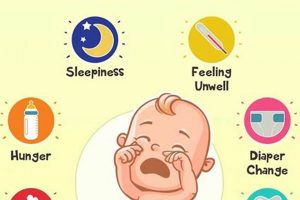
Physical discomfort represents a significant contributor to infant crying during sleep. The inability to verbally communicate pain or distress necessitates reliance on crying as a primary means of expression. This discomfort may stem from various sources, including gastrointestinal issues such as gas, constipation, or gastroesophageal reflux; skin irritations from diaper rash or clothing; or physical sensations like being too hot or too cold. An infant experiencing such discomfort during sleep will frequently exhibit restlessness, whimpering, and escalate to full-fledged crying if the source of the distress is not alleviated. For example, an infant with trapped gas may arch their back, pull their legs up, and cry inconsolably until the gas is passed.
Identifying and addressing the specific source of physical discomfort is critical for resolving sleep disruptions. This requires a careful assessment of the infant’s environment and physical condition. Checking for common causes like a soiled diaper or overly tight clothing is a first step. Observation of feeding patterns and stool consistency can provide clues about potential gastrointestinal issues. In cases of suspected reflux, consulting a pediatrician is essential to determine appropriate management strategies, which may include dietary modifications or medication. Eliminating environmental factors, such as adjusting room temperature or using softer clothing, can also reduce instances of discomfort.
Understanding the role of physical discomfort in infant sleep crying is paramount for effective caregiving. While crying is a normal part of infant communication, persistent and unexplained crying during sleep warrants thorough investigation. By systematically addressing potential sources of physical distress, caregivers can often alleviate the cause of the crying and promote more restful sleep for the infant, leading to improved well-being for both the infant and caregiver. If simple interventions are ineffective, medical consultation is warranted to rule out underlying medical conditions contributing to the discomfort.
2. Sleep Cycle

The infant sleep cycle differs significantly from that of adults, influencing the likelihood of nocturnal crying. Infants experience shorter sleep cycles, typically lasting 50-60 minutes, compared to the 90-minute cycles of adults. A greater proportion of this time is spent in active sleep, also known as rapid eye movement (REM) sleep. During REM sleep, brain activity is high, and infants are more prone to twitching, startling, and vocalizing, including crying. These vocalizations are not necessarily indicative of distress but rather a normal component of active sleep processing. An infant transitioning between sleep cycles may briefly awaken and cry before falling back asleep, which may be misconstrued as a problem. Consider a scenario where a parent, unaware of typical infant sleep cycles, immediately responds to such transient crying, potentially disrupting the infant’s natural sleep progression. This emphasizes the importance of understanding normal sleep patterns to avoid unnecessary interventions.
Furthermore, variations in sleep cycle organization contribute to the timing of sleep-related crying episodes. For instance, if an infant is put to bed overtired, stress hormones can disrupt the sleep cycle, leading to more frequent and prolonged awakenings with associated crying. Understanding this link necessitates caregivers to be attuned to infant sleep cues and avoid pushing bedtime too late. Consistent adherence to a regular sleep schedule, taking into account the infant’s age-appropriate wake windows, can promote more consolidated sleep and reduce the incidence of disruptive crying. Sleep cycle irregularities may also be indicative of underlying sleep disorders or medical conditions, necessitating professional evaluation. Examples include sleep apnea, where breathing interruptions disrupt sleep cycles, or gastroesophageal reflux, which may cause discomfort and awakenings, particularly during certain sleep stages.
In conclusion, the infant sleep cycle is a critical determinant of nocturnal crying. Recognizing the differences between infant and adult sleep architecture, being mindful of factors that disrupt sleep cycles, and differentiating between normal transitional crying and distress signals are essential for effective infant care. A thorough understanding of sleep cycles informs appropriate parental responses, promoting healthy sleep habits and mitigating unnecessary distress. In instances of persistent or concerning sleep disruptions, consultation with a pediatrician or sleep specialist is recommended to rule out underlying medical or sleep-related issues. Failing to consider sleep cycles in addressing infant crying can lead to misinterpretations and inappropriate interventions, potentially exacerbating the problem.
3. Environmental Factors

The immediate surroundings of an infant significantly influence sleep quality and are often implicated in nocturnal crying episodes. Maintaining a suitable sleep environment is crucial for promoting restful sleep and mitigating potential triggers for distress. Specific environmental elements can directly impact an infant’s comfort and overall well-being, consequently affecting sleep patterns.
- Temperature Regulation
Ambient temperature within the infant’s sleep space plays a pivotal role. Both excessively warm and excessively cool environments can disrupt sleep. Overheating, particularly from over-bundling, is a known risk factor for Sudden Infant Death Syndrome (SIDS). Conversely, a room that is too cold can cause discomfort and restlessness, leading to crying. The ideal temperature range for an infant’s sleep environment is typically recommended to be between 68-72F (20-22C). Proper ventilation and appropriate clothing layers are essential for maintaining optimal thermal comfort. An example would be an infant crying due to being swaddled too tightly in a warm room, leading to overheating and distress.
- Noise Levels
Exposure to excessive or inconsistent noise can impede an infant’s ability to fall asleep and stay asleep. Loud noises, such as traffic or household activity, can startle infants, causing awakenings and subsequent crying. A consistently quiet environment, or the use of white noise, can mask disruptive sounds and promote more consolidated sleep. The introduction of sudden, loud noises (e.g., a dog barking) may disrupt sleep cycles and trigger crying.
- Light Exposure
Light exposure, particularly artificial light, can interfere with the infant’s circadian rhythm and melatonin production, impacting sleep-wake cycles. Darkness promotes the production of melatonin, a hormone that regulates sleep. Exposure to bright lights before bedtime or during the night can suppress melatonin secretion and make it harder for the infant to fall asleep and stay asleep. Maintaining a dark sleep environment, especially during nighttime hours, is conducive to restful sleep. A common example is an infant waking frequently and crying in a room with a nightlight that is too bright.
- Air Quality
Air quality within the sleep environment influences respiratory health and can contribute to sleep disturbances. Irritants such as dust, pet dander, cigarette smoke, or strong odors can exacerbate respiratory issues, leading to coughing, congestion, and subsequent crying. Maintaining clean air through regular ventilation, the use of air purifiers, and avoidance of smoking in the vicinity of the infant is essential. Exposure to secondhand smoke, for instance, can irritate an infant’s airways, leading to coughing and breathing difficulties that manifest as crying during sleep.
In conclusion, carefully managing environmental factors within the infant’s sleep space is crucial for minimizing potential triggers for nocturnal crying. Addressing temperature, noise, light, and air quality can significantly improve sleep quality and reduce episodes of distress. Failure to consider these environmental variables may lead to persistent sleep disturbances and unnecessary distress for both the infant and caregiver. In instances where environmental modifications are insufficient to resolve the crying, other potential factors, such as medical conditions, should be investigated.
4. Medical Conditions

Certain medical conditions are significantly associated with infant crying during sleep. The presence of underlying health issues can manifest as discomfort, pain, or physiological disturbances that disrupt sleep patterns and trigger crying episodes. Ruling out or managing these conditions is a critical step in addressing persistent nighttime crying.
- Gastroesophageal Reflux (GERD)
Gastroesophageal reflux occurs when stomach contents flow back into the esophagus, causing irritation and discomfort. Infants with GERD may experience increased crying, particularly after feeding or when lying down. The backward flow of stomach acid can cause a burning sensation, leading to frequent awakenings and distress. An infant with GERD might arch their back, cough, or spit up frequently in addition to crying during sleep. Management strategies include feeding the infant in an upright position, keeping them upright for a period after feeding, and, in severe cases, medication prescribed by a physician.
- Colic
Colic is defined as excessive crying in an otherwise healthy infant, typically lasting more than three hours a day, for more than three days a week, for at least three weeks. While the exact cause of colic is unknown, it is associated with increased crying, often during evening hours, which can extend into the night and disrupt sleep. Infants with colic may pull their legs up to their abdomen, clench their fists, and exhibit facial grimacing. Management strategies often involve soothing techniques such as swaddling, rocking, and white noise, but persistent symptoms warrant medical evaluation to rule out other causes.
- Food Allergies and Intolerances
Food allergies or intolerances, particularly to cow’s milk protein, can trigger gastrointestinal symptoms such as gas, bloating, and abdominal pain, which can disrupt sleep and lead to crying. Infants may exhibit symptoms like diarrhea, vomiting, or eczema in addition to increased crying. An example would be an infant with cow’s milk protein intolerance experiencing abdominal discomfort after consuming formula, leading to frequent awakenings and crying. Diagnosis often involves elimination diets and medical supervision. If confirmed, dietary adjustments, such as switching to a hypoallergenic formula, are necessary.
- Ear Infections
Ear infections (otitis media) can cause significant pain and discomfort, particularly when lying down, due to increased pressure in the middle ear. Infants with ear infections may pull at their ears, exhibit irritability, and have difficulty sleeping. Crying may be more pronounced during nighttime hours when the infant is horizontal. A physician should evaluate any suspected ear infection to determine the appropriate course of treatment, typically involving antibiotics.
Medical conditions represent a significant category of factors contributing to infant crying during sleep. While not all crying signifies a medical issue, persistent or unusual crying patterns necessitate medical evaluation to identify and manage any underlying health problems. Failure to address these conditions can perpetuate sleep disturbances and negatively impact the infant’s well-being. Appropriate medical intervention, when indicated, is essential for resolving medically related sleep disruptions and promoting restful sleep.
5. Developmental Stages

Infant development unfolds through distinct stages, each characterized by new cognitive, emotional, and physical milestones. These developmental leaps can transiently disrupt established sleep patterns, contributing to increased crying during sleep. The correlation arises from the neurological and physiological changes accompanying these advancements. For instance, periods of rapid brain development, such as those occurring during cognitive skill acquisition, can manifest as sleep disturbances. Teething, a common developmental event, introduces physical discomfort that directly interrupts sleep and elicits crying. Real-life examples include infants experiencing sleep regression during periods of intensive language development or displaying heightened nighttime crying during the emergence of new motor skills like crawling. Understanding these connections allows caregivers to anticipate and respond appropriately to these transient disruptions, mitigating parental anxiety and optimizing infant comfort.
Furthermore, emotional development plays a crucial role. As infants develop a greater awareness of their surroundings and experience separation anxiety, sleep patterns may be affected. Increased crying during sleep can signify an infant’s struggle with these emerging emotional complexities. Attachment theory highlights the importance of secure attachment for emotional regulation; disruptions in attachment can exacerbate separation anxiety and contribute to sleep disturbances. Practical applications involve fostering a secure attachment through consistent responsiveness and creating a predictable bedtime routine that reinforces the infant’s sense of security. Conversely, inconsistent or neglectful caregiving can intensify emotional distress and further disrupt sleep patterns.
In summary, developmental stages exert a notable influence on infant sleep and can precipitate episodes of crying during sleep. The dynamic interplay between neurological, physical, and emotional development creates inherent vulnerabilities to sleep disruption. Recognizing the connection between these developmental milestones and sleep patterns enables caregivers to provide targeted support and interventions. While understanding this connection is crucial, challenges arise in differentiating between normal developmental variations and underlying medical or environmental factors contributing to sleep disturbances. A comprehensive assessment, incorporating both developmental considerations and medical evaluation when necessary, is essential for promoting healthy sleep and overall infant well-being.
Frequently Asked Questions
The following questions address common parental concerns regarding infant crying during sleep, offering evidence-based explanations and practical guidance.
Question 1: What are the most prevalent causes of infant sleep crying?
Several factors may contribute, including physiological discomfort (e.g., gas, hunger), environmental conditions (e.g., temperature, noise), developmental stages (e.g., teething, sleep regressions), and underlying medical conditions (e.g., gastroesophageal reflux, ear infections).
Question 2: How to differentiate between normal sleep sounds and actual crying in infants?
Observation is key. Transient whimpering or fussing during sleep cycle transitions may be normal. Sustained crying, accompanied by body movements, facial grimacing, or difficulty returning to sleep, suggests distress requiring attention.
Question 3: When to seek professional medical advice for infant sleep crying?
Consult a pediatrician if the crying is persistent, inconsolable, accompanied by other symptoms (e.g., fever, vomiting, poor feeding), or if there are concerns about the infant’s overall health and development.
Question 4: Can specific sleep positions influence sleep crying?
The American Academy of Pediatrics recommends placing infants on their backs to sleep to reduce the risk of Sudden Infant Death Syndrome (SIDS). While back sleeping is safest, some infants may experience increased reflux in this position. Addressing reflux with appropriate interventions is essential.
Question 5: Are there specific techniques to soothe an infant crying in their sleep?
Gentle patting, shushing sounds, or offering a pacifier may provide comfort. Avoid immediately picking up the infant, allowing an opportunity for self-soothing. If the crying persists, address potential causes of discomfort.
Question 6: Do infant sleep training methods reduce nighttime crying?
Sleep training methods, implemented at appropriate ages and with consideration for the infant’s developmental stage, can establish consistent sleep patterns and reduce overall nighttime crying. Consult with a pediatrician or sleep specialist before initiating any sleep training program.
Accurate identification of the underlying cause of infant sleep crying is critical for effective management. Persistent or concerning symptoms warrant professional medical assessment.
The following section will summarize key takeaways from this article.
Why is My Baby Crying in Her Sleep
This exploration has illuminated the multifaceted nature of nocturnal infant crying. The analysis encompassed physiological factors, such as discomfort and sleep cycle dynamics; environmental considerations, including temperature and noise; the impact of developmental milestones; and potential underlying medical conditions. The information presented aims to provide a framework for assessing and addressing these common occurrences.
Effective management necessitates careful observation, appropriate intervention, and, when warranted, professional consultation. Recognizing the potential for both normal developmental variations and underlying medical issues is crucial for promoting infant well-being. Continued research and awareness are essential for refining diagnostic approaches and treatment strategies, ultimately enhancing the quality of sleep for infants and alleviating parental anxiety.