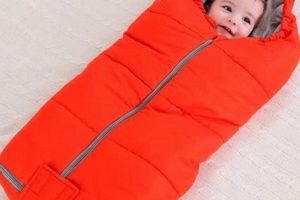
The inquiry regarding infant sleep within a specific cushioned lounger is a subject of considerable discussion among caregivers and pediatric safety experts. This concern centers around the safe sleep practices recommended for babies, specifically regarding the potential suffocation risks associated with soft bedding and inclined surfaces.
Understanding the established safety guidelines is crucial. Organizations dedicated to infant health advocate for firm, flat sleep surfaces to minimize the risk of Sudden Infant Death Syndrome (SIDS) and accidental suffocation. Inclined sleepers and soft bedding can compromise an infant’s airway and limit their ability to move freely, leading to potential hazards. The debate has historical roots in conflicting views on infant comfort versus stringent safety protocols, resulting in continuous reviews and recommendations by medical professionals.
This analysis will explore the safety recommendations for infant sleep environments, focusing on the potential risks associated with using loungers for unsupervised sleep. It will also delve into alternative solutions that promote safe and comfortable rest for infants, referencing guidelines from reputable pediatric and safety organizations.
Guidance Regarding Infant Sleep in a Lounger
The following provides practical advice regarding the use of a specific cushioned lounger for infants, emphasizing adherence to safety guidelines and minimizing potential risks.
Tip 1: Supervise Use Diligently: Loungers are primarily designed for supervised lounging and play. Constant visual monitoring of the infant is essential while the baby is in the lounger.
Tip 2: Avoid Unattended Sleep: Do not allow the infant to fall asleep unattended in the lounger. If the infant drifts off, promptly transfer them to a safe sleep environment, such as a crib or bassinet with a firm, flat mattress.
Tip 3: Use on the Floor: Place the lounger on the floor to minimize the risk of falls. Avoid using it on elevated surfaces such as tables, countertops, or beds.
Tip 4: Ensure Proper Positioning: Position the infant on their back while in the lounger. This reduces the risk of positional asphyxia and promotes optimal breathing.
Tip 5: Refrain from Restraints: Do not use any additional restraints or positioning devices in conjunction with the lounger. These can create hazards and impede the infant’s natural movement.
Tip 6: Discontinue Use as Infant Becomes Mobile: Once the infant begins to roll over or push up, discontinue use of the lounger. Increased mobility elevates the risk of the infant shifting into a hazardous position.
Tip 7: Review Product Guidelines: Always refer to the manufacturer’s instructions and safety warnings for specific guidance on lounger usage. Adherence to these guidelines is paramount for ensuring the infant’s safety.
Prioritizing adherence to safe sleep practices is crucial for mitigating risks and ensuring infant well-being. Responsible use of any infant product requires careful consideration of established guidelines.
Moving forward, this discussion will focus on safe sleep alternatives and resources for parents seeking to create optimal environments for their infants.
1. Supervision

The concept of supervision holds a pivotal role in evaluating the safety and suitability of an infant sleeping within a cushioned lounger. Active, vigilant supervision is frequently cited as a mitigating factor when considering potential risks associated with the product’s design and recommended usage.
- Active Monitoring and Response
Continuous, direct observation of the infant while in the lounger is essential. Active monitoring allows immediate detection of any distress signals, such as labored breathing or positional changes that compromise the airway. Prompt response to such signals is critical for preventing adverse events.
- Limitations of Passive Supervision
Relying solely on auditory monitoring or remote observation systems is insufficient. Passive supervision methods lack the immediacy required to address potential hazards effectively. Caregivers must maintain close proximity and visual contact with the infant at all times during lounger use.
- Inconsistency of Caregiver Attention
Human attention is inherently variable. Fatigue, distraction, and competing demands can compromise the consistency of supervision, particularly during nighttime hours. This variability introduces risk, as even momentary lapses in attention can have serious consequences.
- Supervision as a Supplement, Not a Substitute
While diligent supervision can reduce certain risks, it does not eliminate the inherent dangers associated with soft sleep surfaces or inclined positions. Supervision should be regarded as a supplementary measure, not a substitute for adherence to established safe sleep guidelines.
Ultimately, while enhanced vigilance can help minimize the dangers, it cannot negate the risks inherent in an unsuitable sleep environment. Decisions regarding infant sleep should prioritize evidence-based safety recommendations over reliance on constant surveillance.
2. Surface Inclination

The angle of repose, or surface inclination, represents a critical factor in evaluating the suitability of a cushioned lounger for infant sleep. The degree to which a surface deviates from a horizontal plane introduces specific physiological and safety concerns that warrant careful consideration.
- Airway Compromise
An inclined surface can exacerbate the risk of positional asphyxia. The infant’s head may slump forward, obstructing the airway and impeding normal breathing. This risk is particularly pronounced in young infants with limited neck muscle strength and control. This potential for airway compromise directly contradicts safe sleep recommendations that advocate for a flat, firm surface to maintain an open airway.
- Increased Risk of Gastroesophageal Reflux
While an inclined position is sometimes recommended to alleviate gastroesophageal reflux, prolonged or unsupervised use can lead to complications. The infant’s stomach contents may more readily reflux into the esophagus, potentially causing discomfort, aspiration, and respiratory distress. This consideration necessitates careful evaluation of the benefits and risks, particularly in the context of unsupervised sleep.
- Impact on Motor Development
Extended periods spent on an inclined surface can limit the infant’s opportunities for developing essential motor skills. Time spent on a flat, firm surface is crucial for promoting tummy time, facilitating neck muscle strengthening, and encouraging the development of rolling and crawling skills. An inclined position may restrict movement and delay these developmental milestones.
- Deviation from Safe Sleep Recommendations
The prevailing safe sleep guidelines, endorsed by leading pediatric organizations, emphasize the importance of placing infants on their backs on a firm, flat sleep surface. An inclined surface directly contradicts these recommendations, increasing the risk of Sudden Infant Death Syndrome (SIDS) and other sleep-related fatalities. This deviation necessitates a thorough understanding of the potential consequences and a commitment to prioritizing safe sleep practices.
In summation, the inclination of a sleep surface introduces significant safety concerns, impacting the infant’s airway, potentially exacerbating reflux, hindering motor development, and contradicting established safe sleep guidelines. The relationship between surface inclination and infant safety necessitates a cautious approach when considering the suitability of inclined loungers for infant sleep.
3. Suffocation Risk

Suffocation risk constitutes a primary concern when evaluating the suitability of a cushioned lounger for infant sleep. The design characteristics of such loungers, specifically the presence of soft padding and contoured surfaces, inherently elevate the potential for airway obstruction. This heightened risk stems from the infant’s limited ability to reposition themselves, particularly during the initial months of life when head and neck control are still developing. If an infant’s face presses against the soft material, the pliable surface may conform to the facial contours, potentially impeding airflow and leading to suffocation. Instances have been documented where infants have succumbed to positional asphyxia while using similar products, underscoring the tangible threat associated with soft bedding and unsupervised sleep. Understanding this risk is paramount for caregivers considering the utilization of such devices, as it directly informs decisions regarding safe sleep practices.
The practical significance of recognizing the suffocation risk extends beyond theoretical understanding. Caregivers must actively mitigate this hazard by adhering to recommended guidelines, which explicitly discourage the use of soft bedding, including cushioned loungers, for unsupervised infant sleep. Furthermore, alternative positions may increase suffocation risks. The practice of placing infants on their stomachs, irrespective of the sleep surface, exacerbates the threat of airway obstruction due to their inability to lift and turn their heads independently. Consequently, maintaining a supine (back-sleeping) position on a firm, flat surface remains the cornerstone of safe sleep recommendations. The product’s intended use for lounging, not sleeping, does not negate the inherent risk if an infant falls asleep unattended.
In summary, the correlation between suffocation risk and the use of a cushioned lounger for infant sleep is undeniable. The soft, contoured surfaces of such products present a tangible threat to infant safety, necessitating strict adherence to safe sleep guidelines and continuous supervision. Overlooking this connection carries severe consequences, emphasizing the importance of prioritizing evidence-based recommendations over perceived convenience or comfort. The challenge lies in consistently applying these principles, acknowledging that the risk is ever-present, and actively working to create the safest possible sleep environment for the infant.
4. Mobility Limits

The constraint on an infant’s movement, or “Mobility Limits,” is a critical consideration when assessing the suitability of a cushioned lounger for sleep. An infant’s ability to adjust position autonomously is crucial for self-regulation and minimizing risks associated with airway obstruction or overheating. The restricted movement within a lounger can compromise these natural protective mechanisms.
- Impaired Airway Correction
The design of a lounger, with its contoured shape, can limit an infant’s capacity to reposition their head if their airway becomes compromised. Should the infant’s face press against the soft padding, the inability to turn their head freely could lead to positional asphyxia. The natural reflex to shift positions when breathing is impaired is effectively hindered.
- Reduced Thermal Regulation
Infants have limited capacity to regulate their body temperature. If an infant becomes overheated within a lounger, their ability to remove themselves from the heat source is compromised. The confined space prevents them from stretching out or moving to a cooler area, increasing the risk of hyperthermia.
- Delayed Motor Skill Development
Prolonged periods spent within a lounger can impede the development of essential motor skills. The restriction of movement limits opportunities for the infant to practice rolling, reaching, and pushing up, which are critical for strengthening muscles and building coordination. The infant is not afforded the freedom to explore and interact with their environment in a manner conducive to motor development.
- Increased Dependence on External Intervention
Due to restricted mobility, the infant becomes more reliant on external intervention to address discomfort or potential hazards. Caregivers must be consistently vigilant and responsive to the infant’s needs, as the infant cannot independently alleviate discomfort or reposition themselves away from potential risks.
These limitations collectively underscore the importance of careful consideration when using a cushioned lounger for infants. While supervision can mitigate some risks, the inherent restrictions on an infant’s ability to move freely necessitate adherence to safe sleep guidelines and the prioritization of sleep environments that promote unrestricted movement and self-regulation. The product’s primary intention is for lounging purposes, not for prolonged, unsupervised sleep, thereby highlighting the caution needed to promote infant well-being.
5. Product Intended Use

The phrase “Product Intended Use” directly intersects with inquiries about infant sleep safety in a specific lounger. Manufacturers design and market infant products for particular purposes. Deviating from that design intention can introduce risks that were not accounted for during product development and testing. If a product is intended for supervised lounging and not explicitly for sleep, then utilizing it as a sleep surface fundamentally alters the risk profile. The documented cases of infant injuries and fatalities involving products misused as sleep surfaces underscore the importance of adhering to intended use. For example, if a car seat is used for prolonged sleeping outside the car, an increased risk of positional asphyxia arises, because the car seat was not designed for such sleep scenarios. Likewise, misuse of loungers for unattended sleep carries inherent dangers.
Understanding the distinction between lounging and sleeping is paramount. Lounging implies active caregiver supervision and engagement, where the infant is monitored and interacted with while awake. Sleeping, particularly unattended sleeping, necessitates a safe sleep environment designed specifically to minimize risk. Many loungers feature soft surfaces and inclines which, while potentially comfortable for brief periods, do not meet the established criteria for safe sleep surfaces outlined by pediatric health organizations. The product’s advertising materials often highlight its benefits for supervised play and relaxation, but generally include explicit warnings against unsupervised sleep. It is, therefore, the caregiver’s responsibility to reconcile the product’s advertised benefits with known safe sleep guidelines.
In conclusion, the “Product Intended Use” serves as a crucial determinant when evaluating whether an infant can safely sleep in a specific lounger. Disregarding the manufacturer’s explicit instructions and safe sleep recommendations increases the likelihood of adverse outcomes. Caregivers must prioritize infant safety by adhering to intended use guidelines and establishing a dedicated, safe sleep environment separate from products designed primarily for lounging and supervised play.
6. Safe Sleep Guidelines
Established “Safe Sleep Guidelines” serve as a foundation for minimizing the risk of Sudden Infant Death Syndrome (SIDS) and other sleep-related fatalities. The question of whether an infant can safely sleep in a specific cushioned lounger necessitates rigorous evaluation against these evidence-based recommendations.
- Firm Sleep Surface
Safe Sleep Guidelines unequivocally recommend a firm sleep surface. Cushioned loungers, by their nature, possess a soft, pliable surface that can conform to an infant’s face, potentially obstructing airflow. This directly contradicts the guideline, increasing the risk of suffocation. Real-life instances have demonstrated the dangers of soft bedding in infant sleep environments, leading to clear directives against their use.
- Supine Sleeping Position
The supine position (back-sleeping) is a cornerstone of Safe Sleep Guidelines. This position has been proven to significantly reduce the risk of SIDS. While a cushioned lounger may not explicitly encourage a non-supine position, its design can potentially lead to an infant shifting onto their side or stomach, particularly if unrestrained. This increases the risk of airway compromise and negates the benefits of the supine position.
- Bare Sleep Environment
A “bare” sleep environment, devoid of loose bedding, pillows, bumpers, and other soft objects, is a critical component of Safe Sleep Guidelines. These items pose a suffocation hazard. The cushioned nature of the lounger itself violates this guideline, as the soft padding can obstruct an infant’s airway if their face presses against it. This aspect is particularly concerning, as the lounger’s intended design incorporates the very element that Safe Sleep Guidelines actively discourage.
- Supervision vs. Safe Sleep
While supervision is essential, it is not a substitute for a safe sleep environment. Safe Sleep Guidelines emphasize that even with diligent monitoring, inherent risks associated with unsafe sleep surfaces remain. The presence of a caregiver does not negate the suffocation hazard posed by a soft surface or the potential for positional asphyxia. Therefore, regardless of the level of supervision, the use of a cushioned lounger for infant sleep introduces unacceptable risk.
The application of “Safe Sleep Guidelines” to the question of whether an infant can sleep in a specific cushioned lounger reveals a fundamental conflict. The inherent design characteristics of the lounger, namely its soft surface and potential for positional compromise, directly contradict established safety recommendations. Therefore, adherence to Safe Sleep Guidelines necessitates avoiding the use of such loungers for unsupervised infant sleep.
7. Alternative Positions

The consideration of “Alternative Positions” is crucial when assessing the safety implications of infant sleep in a cushioned lounger. Because placing a baby in an environment not specifically designed for sleep introduces potential risks, the various positions an infant could assume within the lounger become a primary concern. If the infant shifts into a prone or side-lying position, particularly if unsupervised, the risk of suffocation increases due to the soft surfaces and potential for airway obstruction. For example, an infant may roll from a supine (back-sleeping) position onto their stomach, pressing their face into the cushioned material, a scenario that directly contradicts safe sleep recommendations and elevates the possibility of positional asphyxia. Consequently, the understanding of “Alternative Positions” becomes a vital component in evaluating whether an infant can safely sleep in such a lounger.
The implications of “Alternative Positions” extend to the practical application of safe sleep practices. While the initial placement of an infant may adhere to recommended guidelines, the potential for unintended positional changes necessitates a thorough risk assessment. If an infant is capable of rolling over, the confines of the lounger may further restrict their ability to adjust to a comfortable and safe position. This mobility restriction amplifies the danger, as the infant lacks the means to alleviate any airway obstruction independently. Given these concerns, healthcare professionals consistently advise against using loungers as sleep surfaces, even when caregivers intend for the infant to remain in a supine position. The emphasis lies on creating a controlled and predictable sleep environment, which a lounger inherently compromises.
Ultimately, the relationship between “Alternative Positions” and the advisability of infant sleep in a cushioned lounger is directly proportional to the level of risk. The inability to guarantee that an infant will maintain a safe sleeping position within the device highlights the inherent dangers associated with its use as a sleep surface. This understanding underscores the importance of adhering to evidence-based safe sleep guidelines, which prioritize a firm, flat surface and a supine sleeping position. The challenges associated with managing positional changes emphasize the need for alternative sleep solutions that promote infant safety and minimize the potential for adverse outcomes.
Frequently Asked Questions About Infant Sleep in a Cushioned Lounger
The following addresses common inquiries regarding the suitability of using a specific cushioned lounger for infant sleep, emphasizing adherence to safety guidelines.
Question 1: Is it safe for an infant to sleep in a cushioned lounger unattended?
No, it is not considered safe for an infant to sleep in a cushioned lounger without supervision. The soft surfaces and potential for positional airway obstruction present a suffocation risk.
Question 2: What are the primary risks associated with using a lounger for infant sleep?
The primary risks include suffocation due to the soft surface, positional asphyxia if the infant’s airway is compromised, and the potential for overheating. Additionally, the inclined position may exacerbate gastroesophageal reflux.
Question 3: Can constant supervision eliminate the risks of using a lounger for infant sleep?
While constant supervision can mitigate some risks, it does not eliminate the inherent dangers associated with soft sleep surfaces and potential airway compromise. Safe sleep environments are designed to minimize risk even in the absence of constant vigilance.
Question 4: What sleep surface is recommended for infants?
The American Academy of Pediatrics recommends placing infants on their backs on a firm, flat sleep surface, such as a crib or bassinet with a tightly fitted sheet. The sleep environment should be free of loose bedding, pillows, and soft toys.
Question 5: What is the intended use of a cushioned lounger?
Cushioned loungers are typically designed for supervised lounging and playtime, not for unattended sleep. Utilizing the product outside of its intended purpose can introduce unforeseen risks.
Question 6: Are there any alternative products that provide a safer sleep environment for infants?
Yes, cribs, bassinets, and bedside sleepers that meet current safety standards offer a safer sleep environment. These products are designed with firm, flat surfaces and breathable materials to minimize the risk of suffocation.
Prioritizing safe sleep practices is crucial for ensuring infant well-being. Caregivers are encouraged to consult with pediatricians or other healthcare professionals for further guidance on creating a safe sleep environment.
Moving forward, this analysis will explore resources for parents seeking further information on safe sleep practices and infant care.
Can Baby Sleep in Snuggle Me
The analysis has illuminated the core concerns surrounding infant sleep within a cushioned lounger. Examination of supervision requirements, surface inclination impacts, suffocation risks, mobility limitations, adherence to product intended use, compliance with safe sleep guidelines, and the potential for alternative positions has revealed inherent conflicts between the device’s design and established safe sleep practices. The evidence consistently points to elevated risks when using such loungers for unsupervised infant sleep.
Therefore, responsible caregivers must prioritize evidence-based guidelines and exercise caution. The creation of a safe sleep environment, adhering to recommendations from pediatric health organizations, remains paramount. Continued vigilance and a commitment to safe sleep principles are essential for ensuring infant well-being and minimizing potential hazards. Further research and ongoing education within the caregiving community remain vital for promoting optimal infant safety practices.

![Baby Sleepwear: What Should Baby Wear to Sleep? [Guide] | Baby Care 101: Essential Tips for Happy, Healthy Babies](https://singlebabies.com/wp-content/uploads/2026/04/th-491-300x200.jpg "Baby Sleepwear: What Should Baby Wear to Sleep? [Guide] Baby Care 101: Essential Tips for Happy, Healthy Babies")