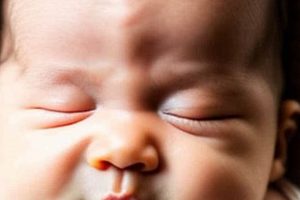
Infant vocalizations during sleep, characterized by periods of distress, are a common occurrence. These episodes range in intensity and duration and can be unsettling for caregivers. They are often spontaneous and seemingly without an obvious trigger.
Understanding the underlying reasons for such behavior is beneficial for parental well-being and informed caregiving. Historically, such nocturnal cries were often attributed to supernatural causes. Modern research, however, offers more physiologically-based explanations.
The potential causes for these sleep disturbances include normal sleep cycle transitions, physiological needs, and possible discomfort. The following sections will explore these factors in greater detail.
Addressing Infant Sleep Vocalizations
The following guidelines aim to provide practical steps when addressing unexplained infant crying during sleep. These recommendations focus on addressing potential causes and promoting a more restful environment.
Tip 1: Observe and Document: Maintain a log of the crying episodes, noting the time, duration, and any accompanying behaviors (e.g., restlessness, limb movement). This documentation can reveal patterns and potential triggers.
Tip 2: Rule Out Basic Needs: Before assuming a more complex cause, ensure that the infant is not experiencing hunger, discomfort from a soiled diaper, or being either too cold or too warm. Address these needs promptly and quietly.
Tip 3: Evaluate the Sleep Environment: Assess the temperature, lighting, and noise levels in the infant’s sleep area. A room that is too hot, too bright, or too noisy can disrupt sleep and lead to crying. Aim for a dark, quiet, and comfortably cool environment.
Tip 4: Gentle Soothing Techniques: If the infant is only lightly fussing, try gentle techniques such as a light touch or soft shushing sounds. Avoid picking up the infant immediately, as this can reinforce the crying behavior.
Tip 5: Maintain a Consistent Sleep Schedule: A regular sleep schedule, with consistent bedtimes and wake-up times, can help regulate the infant’s internal clock and promote more restful sleep. This includes establishing a calming bedtime routine.
Tip 6: Consider Potential Medical Issues: If the crying is persistent, excessive, or accompanied by other symptoms (e.g., fever, difficulty breathing), consult with a pediatrician to rule out any underlying medical conditions, such as reflux or colic.
Consistently applying these strategies can help identify and address the factors contributing to sleep disturbances, potentially reducing the frequency and intensity of crying episodes. The goal is to create a supportive and comfortable sleep environment for the infant.
The next section will discuss the importance of parental self-care in managing the challenges associated with infant sleep disturbances.
1. Sleep Cycle Transitions

Sleep cycle transitions represent a critical component in understanding instances of infant crying during sleep. Infants’ sleep architecture differs significantly from that of adults, characterized by shorter sleep cycles and a greater proportion of active sleep. These factors can contribute to increased arousal and vocalization during transitions between sleep stages.
- Immature Sleep Regulation
Infants’ neurological systems are still developing, resulting in less efficient sleep regulation. The transitions between sleep stages are often abrupt and unstable, making infants more susceptible to awakenings. This instability can manifest as crying, fussing, or other signs of distress as the infant struggles to maintain a consistent sleep state.
- Frequent Arousals
Compared to adults, infants experience more frequent arousals from sleep. These brief awakenings occur as the infant cycles from deep sleep to lighter sleep stages. During these arousals, the infant may cry or make other noises before transitioning back into sleep. This is a normal physiological process, but it can be perceived as problematic by caregivers.
- Active Sleep Dominance
Active sleep, also known as REM sleep, is a sleep stage characterized by increased brain activity, rapid eye movements, and more frequent body movements. Infants spend a significant portion of their sleep time in active sleep. The increased brain activity and body movements associated with active sleep can lead to vocalizations, including crying, as the infant processes information and regulates physiological functions.
- Brief Sleep Cycles
Infant sleep cycles are significantly shorter than adult sleep cycles, typically lasting around 50-60 minutes. This means that infants experience more frequent transitions between sleep stages throughout the night. The increased frequency of these transitions can increase the likelihood of brief awakenings and associated crying episodes.
The interplay of immature sleep regulation, frequent arousals, active sleep dominance, and brief sleep cycles highlights the complexity of infant sleep. The connection is that crying during sleep is a manifestation of the baby transitioning between the multiple phases of sleep with a limited ability to adjust compared to an adult.
2. Hunger or Discomfort

Hunger and physical discomfort represent primary instigators of infant crying, irrespective of whether the infant is awake or asleep. When internal signals related to nutritional needs or physical unease arise, crying serves as the primary communication method. This connection explains instances of nocturnal crying seemingly without external provocation. A drop in blood sugar levels or the sensation of a wet diaper can trigger a crying response, even from a state of sleep. For example, an infant who has not been fed for a prolonged period may exhibit restless sleep followed by crying as glucose levels decline. Similarly, an infant experiencing skin irritation from a soiled diaper might progress from light sleep to agitated crying.
Identifying hunger and discomfort as causes necessitates proactive caregiving strategies. Regular feeding schedules, while not a panacea, can minimize hunger-related crying episodes. Consistent diaper changes, particularly before sleep, are also beneficial. Furthermore, attention to the infant’s immediate environment is important. Ensuring that clothing is neither too tight nor too loose and that the sleeping surface is smooth and comfortable can mitigate potential sources of physical discomfort. These interventions aim to pre-emptively address common causes of distress that manifest as crying during sleep.
In conclusion, while other factors may contribute to infant crying during sleep, hunger and discomfort are significant and readily addressed components. A focus on proactive caregiving, including consistent feeding schedules and diligent attention to hygiene, serves as a foundational approach to minimizing these episodes. Addressing these basic needs can lead to improved sleep quality for the infant and reduced parental stress. Failing to address hunger and discomfort can lead to chronic sleep disruption and make it harder for parents and babies to get quality rest.
3. Environmental Factors

Environmental factors significantly influence infant sleep patterns and the occurrence of nocturnal crying episodes. External stimuli and conditions within the immediate surroundings can disrupt sleep cycles and trigger crying, even in the absence of apparent physiological needs.
- Temperature Regulation
Infants possess a limited capacity to regulate their body temperature effectively. Overheating or excessive chilling can induce discomfort and prompt crying during sleep. The ideal sleep environment maintains a consistent, moderate temperature, generally between 68 and 72 degrees Fahrenheit. Overdressing or using heavy blankets can lead to overheating, while inadequate clothing may result in the infant becoming too cold.
- Noise Levels
Excessive noise, whether sudden or sustained, can disrupt infant sleep. While some infants may habituate to consistent background noise, abrupt or loud sounds can trigger arousal and crying. Exposure to noise levels exceeding 50 decibels can negatively impact sleep quality. Conversely, complete silence can sometimes be unsettling; a low-level white noise source may provide a more conducive sleep environment by masking intermittent sounds.
- Lighting Conditions
Exposure to light, particularly blue light emitted from electronic devices, can interfere with the production of melatonin, a hormone crucial for regulating sleep-wake cycles. Darkness promotes melatonin secretion and facilitates sleep. Maintaining a dimly lit or completely dark sleep environment is recommended. The use of blackout curtains can effectively block external light sources.
- Air Quality
Poor air quality, characterized by pollutants, allergens, or irritants, can compromise infant respiratory health and disrupt sleep. Exposure to cigarette smoke, dust mites, or pet dander can trigger respiratory distress and crying. Maintaining good air quality through regular ventilation, air purifiers, and avoidance of known allergens is essential for promoting restful sleep.
In summary, careful management of environmental factors is critical for minimizing sleep disturbances and nocturnal crying episodes in infants. Maintaining an optimal temperature, controlling noise and lighting levels, and ensuring good air quality contribute to a more stable and conducive sleep environment. These interventions, when implemented consistently, can positively influence sleep quality and reduce instances of unexplained crying.
4. Neurological Immaturity

Neurological immaturity plays a significant role in understanding episodes of seemingly unprovoked crying during infant sleep. The incomplete development of the nervous system affects sleep regulation, sensory processing, and the capacity for self-soothing, all of which can contribute to nocturnal crying.
- Immature Sleep-Wake Regulation
The brainstem, responsible for regulating sleep-wake cycles, is not fully developed at birth. This immaturity results in unstable sleep patterns, frequent arousals, and difficulty maintaining consistent sleep. The consequence is that infants cycle more rapidly between sleep stages and are more easily awakened by internal or external stimuli, often manifesting as crying.
- Underdeveloped Sensory Processing
The sensory systems of infants are still maturing, leading to heightened sensitivity to stimuli. Overstimulation from light, sound, or touch can overwhelm the infant’s processing capacity and trigger a stress response, resulting in crying, even during sleep. The underdeveloped ability to filter sensory input means that stimuli that might be negligible to an adult can be disruptive for an infant.
- Limited Self-Soothing Capacity
Infants lack the fully developed neural pathways necessary for self-soothing. While they may exhibit rudimentary self-soothing behaviors such as sucking on fingers or turning their heads, these strategies are often insufficient to calm them completely. This limitation means that infants are more reliant on external caregivers to regulate their emotional state and may cry until their needs are met.
- Incomplete Emotional Regulation
The prefrontal cortex, which plays a crucial role in emotional regulation, is still developing during infancy. This immaturity limits the infant’s ability to modulate emotional responses to internal or external stressors. As a result, infants may experience heightened emotional reactivity and express distress through crying, even in the absence of an obvious trigger.
The cumulative effect of these aspects of neurological immaturity is a heightened susceptibility to sleep disturbances and crying episodes. The interplay of these factors underscores the importance of providing a supportive and responsive caregiving environment to help infants regulate their sleep, process sensory input, develop self-soothing skills, and gradually mature their emotional regulation capabilities. Understanding these limitations is essential for interpreting and responding effectively to instances of infant crying during sleep.
5. Emotional Regulation

Infant emotional regulation is intrinsically linked to instances of crying during sleep. The ability to manage and modulate emotional responses is nascent in infancy, making emotional dysregulation a significant factor in sleep disturbances. Because an infant’s capacity to self-soothe and modulate distress is underdeveloped, minor discomforts or internal sensations can escalate into crying episodes, even while asleep. For example, a slight shift in body temperature or a fleeting dream fragment might trigger a cascade of distress that the infant cannot independently resolve. This manifests as crying until a caregiver intervenes and provides external regulation.
The importance of emotional regulation as a component of sleep-related crying lies in its influence on arousal thresholds. An infant with limited emotional regulation skills is more easily aroused from sleep by internal stimuli. This heightened sensitivity stems from an immature nervous system struggling to filter and manage sensory input. Consider a scenario where an infant experiences a mild episode of gas. An emotionally regulated individual might experience this sensation without significant disruption. However, an infant with limited regulation skills may become intensely distressed, leading to crying and awakening. Therefore, fostering healthy emotional development through responsive caregiving can indirectly improve sleep quality by reducing the frequency of dysregulation-induced crying.
Understanding the connection between emotional regulation and sleep crying offers practical significance for caregivers. It shifts the focus from simply suppressing the crying to addressing the underlying emotional needs of the infant. Responsive caregiving, characterized by consistent and sensitive responses to the infant’s cues, can promote secure attachment and the development of emotional regulation skills. This approach recognizes that crying is often a signal of unmet emotional needs, not simply a behavioral issue. Addressing these needs, through soothing touch, verbal reassurance, or feeding, can create a sense of safety and security that reduces the likelihood of future dysregulation-related crying episodes. In conclusion, fostering emotional regulation in infancy is not only beneficial for overall development but also crucial for promoting restful sleep and minimizing instances of unexplained crying.
Frequently Asked Questions
The following addresses common inquiries regarding infant crying during sleep, providing evidence-based explanations and guidance.
Question 1: Is infant crying during sleep always a sign of a serious problem?
No, not always. Crying can stem from normal sleep cycle transitions, mild discomfort, or temporary disturbances. However, persistent or excessive crying accompanied by other symptoms warrants medical consultation.
Question 2: How can one differentiate between normal sleep crying and crying that requires intervention?
Normal sleep crying tends to be brief, infrequent, and not associated with other signs of distress. Crying that requires intervention is prolonged, intense, and accompanied by fever, feeding difficulties, or changes in behavior.
Question 3: Does allowing an infant to “cry it out” during sleep promote self-soothing?
The “cry it out” method remains a subject of debate. While some studies suggest potential benefits for sleep consolidation, others raise concerns about the potential impact on infant attachment and stress levels. Consult with a pediatrician before implementing this approach.
Question 4: Are there specific environmental factors that can contribute to infant crying during sleep?
Yes. Temperature extremes, excessive noise, bright lighting, and poor air quality can disrupt sleep and trigger crying. Maintaining a consistent and comfortable sleep environment is crucial.
Question 5: Can dietary factors in the breastfeeding parent’s diet affect infant sleep and crying?
Potentially. Certain substances, such as caffeine or highly allergenic foods, may pass through breast milk and affect infant sleep and digestion. Dietary adjustments may be considered in consultation with a healthcare professional.
Question 6: When should one seek professional help for infant sleep crying?
Professional consultation is advised if the crying is persistent, excessive, or accompanied by other concerning symptoms. A healthcare provider can assess for underlying medical conditions and provide tailored recommendations.
Understanding that these questions are frequently raised serves to validate the concerns of caregivers and encourage proactive engagement in addressing infant sleep challenges.
The subsequent discussion will delve into practical strategies for fostering a more conducive sleep environment for infants.
Conclusion
The exploration of infant nocturnal crying reveals a multifaceted phenomenon influenced by factors ranging from normal sleep cycle transitions and physiological needs to environmental stimuli and neurological immaturity. Identifying the specific combination of these influences is crucial for developing effective strategies to minimize sleep disruption.
Addressing the underlying causes of infant sleep disturbances requires a holistic approach encompassing consistent caregiving practices and environmental adjustments. Continued research into infant sleep physiology promises to further refine understanding and inform interventions. Consistent and informed caregiving contributes to improved infant well-being and reduces parental stress, establishing a foundation for healthy development.