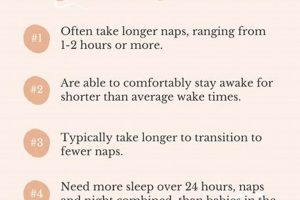
Babies born at 37 weeks gestation are considered early term. Sleep patterns in newborns are highly variable, influenced by factors such as individual temperament, feeding schedules, and environmental stimuli. It is not universally established that infants born at this gestational age consistently exhibit more sleep compared to those born at full term (39-40 weeks). Sleep duration varies considerably among all newborns.
Understanding sleep patterns in early term infants is significant for parents and healthcare providers. Adequate sleep is crucial for infant development, including brain maturation, hormonal regulation, and immune system function. Closely monitoring sleep duration and quality in this population allows for early identification of potential issues, such as feeding difficulties, jaundice, or breathing irregularities, which can indirectly affect sleep.
The subsequent discussion will delve into the specific sleep characteristics observed in babies born at 37 weeks, compare their sleep patterns to those of full-term infants, analyze the potential implications of gestational age on sleep architecture, and offer practical guidance for optimizing sleep environments for early term newborns.
Optimizing Sleep for Early Term Infants
Establishing healthy sleep habits for newborns born at 37 weeks gestation requires careful attention to their unique developmental needs. The following guidance offers practical strategies for promoting optimal rest and ensuring their well-being.
Tip 1: Establish a Consistent Sleep Routine: Maintaining a predictable daily schedule, including consistent feeding times and a regular bedtime, can help regulate an infant’s circadian rhythm. This involves creating a calming pre-sleep routine that signals to the baby that it is time to rest.
Tip 2: Optimize the Sleep Environment: Ensure a dark, quiet, and cool room for sleep. Maintaining a comfortable room temperature and minimizing external stimuli can encourage longer and more restful sleep periods. Avoid using excessive blankets or soft bedding to reduce the risk of suffocation.
Tip 3: Monitor Feeding Patterns: Frequent feeding, especially in the early weeks, can interrupt sleep. However, ensuring adequate caloric intake is crucial for growth and development. Observe the infant’s cues for hunger and feed on demand, while gradually establishing more predictable feeding intervals.
Tip 4: Practice Safe Sleep Practices: Always place the baby on their back to sleep on a firm mattress in a crib or bassinet. Avoid co-sleeping in a bed with the parents, as this increases the risk of sudden infant death syndrome (SIDS). Keep the crib free of toys, pillows, and loose blankets.
Tip 5: Be Attentive to Sleep Cues: Observe the infant for signs of tiredness, such as rubbing eyes, yawning, or becoming fussy. Responding promptly to these cues can prevent overstimulation and facilitate easier settling.
Tip 6: Consider Swaddling: Swaddling can help soothe a fussy infant and promote longer sleep periods by mimicking the feeling of being held. However, ensure the swaddle is not too tight and that the baby’s hips are able to move freely. Discontinue swaddling once the infant shows signs of rolling over.
Tip 7: Consult a Healthcare Professional: If concerns arise regarding the infant’s sleep patterns, feeding difficulties, or general well-being, seek guidance from a pediatrician or other qualified healthcare provider. They can assess the infant’s development and provide personalized recommendations.
These strategies collectively contribute to establishing a supportive environment that encourages healthy sleep in infants born at 37 weeks. Implementing these guidelines can promote optimal growth, development, and overall well-being.
The concluding section will summarize the key considerations for promoting healthy sleep habits in early term infants, emphasizing the importance of ongoing monitoring and proactive intervention when necessary.
1. Gestational age impact.

Gestational age significantly influences sleep patterns in newborns. An infant’s gestational age at birth directly correlates with their neurological maturity and physiological development, both of which are primary determinants of sleep duration and architecture. Therefore, understanding the gestational age impact is crucial when examining the proposition “do babies born at 37 weeks sleep more.”
- Brain Development and Sleep Regulation
The brain undergoes rapid development during the final weeks of gestation. Key structures involved in sleep regulation, such as the brainstem and hypothalamus, mature significantly between 37 and 40 weeks. Infants born at 37 weeks may have a less developed capacity to regulate sleep-wake cycles, potentially leading to fragmented sleep patterns or increased sleep latency compared to full-term infants. This immaturity can manifest as shorter sleep cycles and more frequent awakenings.
- Hormonal Regulation and Sleep
Hormones such as melatonin and cortisol play a vital role in the circadian rhythm and sleep regulation. Late gestation is critical for establishing stable hormonal rhythms. Infants born at 37 weeks may exhibit less mature hormonal control over their sleep-wake cycles. This can lead to unpredictable sleep patterns and challenges in establishing a consistent sleep schedule during the early weeks of life. The consequence can be variable sleep durations that may not align with parental expectations.
- Respiratory Control and Sleep Stability
Respiratory control centers also mature during late gestation. Infants born prematurely or early term may have a higher risk of respiratory instability, such as periodic breathing or apnea, which can disrupt sleep. Apnea events can cause frequent arousals from sleep, shortening sleep duration and potentially impacting sleep quality. These respiratory challenges can significantly alter sleep patterns and perceived sleepiness.
- Feeding Efficiency and Sleep Consolidation
Gestational age influences an infant’s ability to coordinate sucking, swallowing, and breathing during feeding. Infants born at 37 weeks may tire more easily during feeding, requiring more frequent feedings and resulting in interrupted sleep patterns. Inefficient feeding can lead to increased nighttime awakenings, affecting both the infant’s and parents’ sleep. Frequent feedings can lead to the perception of increased sleepiness in the infant, when, in reality, sleep cycles are fragmented due to feeding needs.
In conclusion, the impact of gestational age on sleep is multifaceted. While some babies born at 37 weeks may appear to sleep more due to frequent, albeit fragmented, sleep periods necessitated by feeding needs and neurological immaturity, it’s essential to consider the quality and consolidation of sleep rather than solely focusing on the total sleep time. Gestational age-related differences in brain development, hormonal regulation, respiratory control, and feeding efficiency collectively contribute to the variability observed in sleep patterns among newborns and should be carefully evaluated when considering whether babies born at 37 weeks inherently sleep more.
2. Neurological maturity variations.

Variations in neurological maturity among newborns significantly impact sleep patterns, and this is particularly relevant when considering whether babies born at 37 weeks gestation exhibit increased sleep duration. The brain’s structures responsible for sleep regulation, including the brainstem, thalamus, and cerebral cortex, undergo critical development during the final weeks of gestation. Consequently, an infant born at 37 weeks may possess a less developed neural infrastructure for consolidating sleep cycles compared to a full-term infant. This immaturity can manifest as shorter sleep cycles, frequent arousals, and increased sensitivity to external stimuli, potentially leading to fragmented sleep. While the total sleep time might appear substantial, the quality and continuity of that sleep are crucial factors often overlooked.
The practical significance of understanding neurological maturity variations lies in tailoring care strategies to meet the specific needs of each infant. For instance, healthcare providers and parents can implement strategies to promote sleep consolidation in early-term infants. This may involve creating a consistent sleep environment, minimizing disturbances, and employing soothing techniques to aid in transitioning between sleep cycles. Moreover, awareness of these variations can inform expectations regarding infant sleep patterns, reducing parental anxiety and promoting realistic approaches to sleep management. An example of this is the implementation of “cue-based” feeding schedules, recognizing that neurologically immature infants may have difficulty regulating their feeding needs and may require more frequent, smaller meals, impacting overall sleep patterns.
In summary, neurological maturity variations represent a key determinant of infant sleep patterns, particularly when evaluating the sleep characteristics of babies born at 37 weeks. While the total sleep duration may be comparable to that of full-term infants, the quality and stability of sleep can differ substantially due to less mature neural regulation. Addressing this requires a nuanced understanding of infant neurodevelopment and targeted interventions to support healthy sleep consolidation, ultimately promoting optimal growth and development.
3. Feeding frequency differences.

Feeding frequency differences directly influence sleep patterns, especially in infants born at 37 weeks gestation. Early-term infants often exhibit less developed suckling reflexes and reduced gastric capacity compared to their full-term counterparts. This physiological immaturity necessitates more frequent feedings, both day and night, to ensure adequate caloric intake for growth and development. Consequently, these frequent feeding demands can disrupt sleep cycles, affecting both the duration and continuity of sleep. While the cumulative sleep time may appear substantial, the fragmented nature of sleep due to feeding interruptions is a critical consideration when assessing whether early-term infants, in fact, “sleep more” in a meaningful sense. For instance, an infant requiring feeding every two to three hours, even during the night, will experience shorter, more disrupted sleep periods than an infant who can sustain longer intervals between feedings.
Consider an infant born at 37 weeks who requires frequent, small feedings due to inefficient suckling and swallowing. This infant may sleep a total of 16-18 hours per day, seemingly supporting the idea that early-term infants “sleep more.” However, closer examination reveals that these 16-18 hours are distributed across numerous short naps, punctuated by frequent awakenings for feeding. In contrast, a full-term infant with more developed feeding skills might sleep for fewer hours overall but experience longer, more consolidated sleep periods, leading to potentially greater restorative benefits. The practical significance of understanding these feeding-related disruptions lies in tailoring feeding strategies and sleep environments to accommodate the specific needs of early-term infants. Healthcare providers often recommend strategies such as paced feeding, skin-to-skin contact during feeding, and optimizing sleep hygiene to promote better sleep consolidation despite the increased feeding frequency.
In summary, the relationship between feeding frequency differences and sleep patterns in early-term infants is characterized by a trade-off. While the need for frequent feeding may lead to increased opportunities for short naps throughout the day, it also disrupts sleep continuity, potentially affecting the quality and restorative value of sleep. Therefore, while some early-term infants may appear to “sleep more” based solely on total sleep time, it is crucial to account for the fragmentation caused by feeding demands. Effective management of this dynamic requires a holistic approach that addresses both the feeding and sleep-related needs of the infant, supported by evidence-based recommendations and parental education.
4. Individual temperament influence.

Individual temperament exerts a substantial influence on infant sleep patterns, potentially overshadowing the direct effects of gestational age. Temperament, encompassing traits like activity level, adaptability, and emotional reactivity, contributes significantly to the variability observed in sleep duration and quality among all newborns, including those born at 37 weeks. Infants with a more sensitive or reactive temperament may exhibit difficulties self-soothing and settling into sleep, leading to fragmented sleep and frequent night awakenings. Conversely, infants with a more easygoing temperament may demonstrate greater sleep consolidation, regardless of their gestational age. The notion that babies born at 37 weeks inherently “sleep more” fails to account for these inherent temperamental differences.
Consider two infants born at 37 weeks gestation. One infant, characterized by a high activity level and difficulty adapting to new situations, might struggle to establish a consistent sleep routine, resulting in shorter and more erratic sleep periods. This infant’s temperament directly counteracts any potential predisposition to “sleep more” due to gestational age. In contrast, the second infant, possessing a calmer disposition and greater adaptability, may readily settle into a regular sleep schedule, demonstrating longer and more consolidated sleep periods. Understanding these temperamental influences allows for more targeted interventions, such as parental education on soothing techniques tailored to the infant’s specific temperament or adjustments to the sleep environment to minimize sensory stimulation. Effectively addressing temperamental challenges can promote improved sleep outcomes, regardless of gestational age.
In conclusion, individual temperament represents a critical moderating factor in the relationship between gestational age and sleep patterns. While babies born at 37 weeks may present with specific physiological considerations, the influence of temperament can significantly alter their sleep behavior. Therefore, evaluating whether babies born at 37 weeks inherently “sleep more” requires careful consideration of individual temperamental traits and the implementation of personalized strategies to support healthy sleep habits. Recognizing and addressing temperamental differences is essential for promoting optimal sleep outcomes and ensuring the well-being of both infant and caregivers.
5. Environmental factors play.

Environmental factors exert a significant influence on infant sleep patterns, and their role is particularly relevant when considering whether babies born at 37 weeks gestation exhibit increased sleep duration. These factors encompass a range of external stimuli and conditions that can either promote or disrupt sleep, independent of gestational age. Understanding these influences is crucial for developing targeted strategies to optimize sleep environments for all infants, especially those born early term.
- Noise Levels and Sleep Disruption
Excessive noise, whether from household activities, traffic, or electronic devices, can disrupt sleep continuity in newborns. Infants born at 37 weeks, potentially possessing a less developed ability to filter out extraneous stimuli, may be particularly susceptible to noise-induced arousals. Maintaining a quiet sleep environment, utilizing white noise machines to mask disruptive sounds, or employing soundproofing measures can mitigate the negative impact of noise on sleep patterns. The degree to which noise affects sleep can vary greatly among infants, reflecting individual differences in sensory processing and habituation.
- Light Exposure and Circadian Rhythm
Exposure to light, especially artificial light, can interfere with the establishment of a healthy circadian rhythm in infants. Infants born at 37 weeks may have a less well-defined circadian rhythm compared to full-term infants, making them more vulnerable to the disruptive effects of light exposure. Minimizing light exposure during nighttime sleep, utilizing blackout curtains, and promoting exposure to natural light during daytime hours can help regulate the sleep-wake cycle. The type of light also matters; blue light emitted from electronic screens can be particularly disruptive.
- Temperature and Comfort
Ambient temperature and bedding comfort can significantly impact sleep quality. Both excessively warm and excessively cool temperatures can disrupt sleep, leading to increased wakefulness and fussiness. Infants born at 37 weeks may have a less developed ability to regulate body temperature, making them more susceptible to temperature-related sleep disturbances. Maintaining a comfortable room temperature, typically between 68 and 72 degrees Fahrenheit (20-22 degrees Celsius), and utilizing appropriate bedding can promote optimal sleep conditions.
- Sleep Environment Safety
The safety of the sleep environment is paramount. Factors such as the presence of loose bedding, pillows, or soft toys in the crib can increase the risk of sudden infant death syndrome (SIDS). Infants born at 37 weeks are already at a slightly elevated risk for SIDS compared to full-term infants, making a safe sleep environment even more critical. Adhering to safe sleep guidelines, including placing the infant on their back to sleep on a firm mattress in a crib free of hazards, is essential for minimizing risk and promoting restful sleep.
These environmental factors, while independent of gestational age, interact with the physiological characteristics of infants born at 37 weeks to influence sleep patterns. While some infants may appear to sleep more, the quality and restorative value of that sleep can be compromised by suboptimal environmental conditions. Therefore, optimizing the sleep environment by minimizing noise and light exposure, maintaining a comfortable temperature, and ensuring a safe sleep space is crucial for promoting healthy sleep in all infants, including those born early term.
Frequently Asked Questions
This section addresses common inquiries regarding the sleep habits of infants born at 37 weeks gestation, offering evidence-based insights and practical guidance.
Question 1: Do babies born at 37 weeks sleep more than full-term infants?
It is not definitively established that infants born at 37 weeks consistently sleep more than those born at full term (39-40 weeks). Sleep duration in newborns varies considerably based on individual factors, including temperament, feeding patterns, and environmental influences. While some early-term infants may exhibit longer cumulative sleep times, this can be attributed to fragmented sleep cycles due to frequent feeding needs and potential neurological immaturity, rather than inherently sleeping more.
Question 2: What factors influence sleep patterns in 37-week gestation infants?
Multiple factors contribute to sleep patterns in this population. These include gestational age, neurological maturity, feeding frequency, individual temperament, and environmental conditions. Infants born at 37 weeks may have less mature brain structures involved in sleep regulation, potentially leading to shorter sleep cycles and increased sensitivity to external stimuli. Frequent feeding demands can also disrupt sleep consolidation.
Question 3: Are there any specific concerns related to sleep in infants born at 37 weeks?
Potential concerns include a higher risk of respiratory instability, such as apnea, which can disrupt sleep. Additionally, inefficient feeding skills may lead to frequent nighttime awakenings. Jaundice, more prevalent in early-term infants, can also contribute to increased sleepiness but may mask underlying feeding difficulties.
Question 4: How can parents promote healthy sleep habits for their 37-week gestation infant?
Establishing a consistent sleep routine, optimizing the sleep environment (dark, quiet, cool), feeding on demand while gradually establishing predictable intervals, practicing safe sleep practices (back to sleep, firm mattress, no loose bedding), and being attentive to sleep cues are essential. Consulting a healthcare professional for personalized guidance is also recommended.
Question 5: Is co-sleeping safe for infants born at 37 weeks?
Co-sleeping in a bed with parents is generally discouraged due to an increased risk of sudden infant death syndrome (SIDS), especially in the early weeks of life. Safe sleep practices recommend placing the infant on their back to sleep on a firm mattress in a crib or bassinet without pillows, toys, or loose blankets.
Question 6: When should a healthcare professional be consulted regarding a 37-week gestation infant’s sleep?
A healthcare professional should be consulted if concerns arise regarding the infant’s sleep patterns, feeding difficulties, breathing irregularities, or general well-being. Persistent sleep disturbances, signs of respiratory distress, or failure to thrive warrant prompt medical evaluation.
Key takeaways include the importance of individual assessment, tailored care strategies, and vigilant monitoring of sleep patterns in infants born at 37 weeks gestation. While these infants may appear to sleep more due to frequent, fragmented sleep, it is crucial to prioritize sleep quality and address any underlying issues that may disrupt sleep consolidation.
The subsequent section will provide resources for parents of infants born at 37 weeks, including links to reputable organizations and support networks.
Concluding Thoughts
The inquiry, “do babies born at 37 weeks sleep more,” necessitates a nuanced understanding of various interconnected factors. While some infants born at this gestational age may exhibit longer cumulative sleep times, this observation does not inherently equate to improved sleep quality or restorative benefits. Neurological immaturity, feeding frequency, individual temperament, and environmental influences all contribute to the variability observed in sleep patterns among this population. The sleep of early-term infants often presents as fragmented due to these elements.
Continued research and individualized assessment remain critical for optimizing the sleep environment and supporting the healthy development of infants born at 37 weeks. Prioritizing sleep quality through informed strategies and tailored interventions is imperative for ensuring the well-being of both infant and caregivers, thereby enhancing overall outcomes.