



A wearable blanket, often referred to as a sleep sack, is a garment designed for infants and young children to provide a safe and comfortable sleeping environment. These sacks offer warmth without the need for loose blankets in the crib, mitigating the risk of suffocation. An example of this type of product is a specifically marketed sleep sack intended to promote a positive and restful sleep experience for the baby.
The utilization of a wearable blanket contributes significantly to a child’s sleep safety and quality. By restricting the use of traditional blankets, it reduces the potential for Sudden Infant Death Syndrome (SIDS) associated with accidental suffocation or entanglement. Furthermore, the swaddling effect can help calm infants, promoting longer periods of uninterrupted sleep. The historical transition from loose blankets to more secure sleepwear has been driven by an increasing awareness of infant safety standards and parental desire to provide optimal conditions for their child’s rest.
The following sections will further delve into the features, materials, and usage guidelines of infant sleep sacks, providing a comprehensive understanding of their role in promoting safe and comfortable infant sleep. Topics will include optimal sizing, temperature regulation, and the transition from swaddling to wearable blankets as the child develops.
Tips for Selecting and Using a Baby Sleep Sack
Proper selection and usage of a baby sleep sack are crucial for infant safety and comfort. The following tips offer guidance on maximizing the benefits of this garment while mitigating potential risks.
Tip 1: Prioritize Size and Fit: Ensure the sleep sack is appropriately sized for the infant’s current height and weight, referencing the manufacturer’s guidelines. A sack that is too large can pose a suffocation hazard, while one that is too small may restrict movement and cause discomfort. Regularly assess the fit as the child grows.
Tip 2: Select Appropriate Fabric: Opt for breathable, natural fabrics such as cotton or muslin to prevent overheating. Avoid synthetic materials that may trap moisture and increase the risk of skin irritation. Consider the seasonal climate when choosing fabric weight.
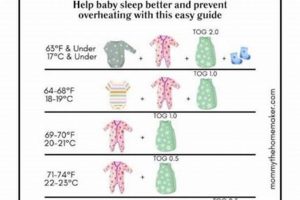
Tip 3: Monitor Room Temperature: Adjust the layers of clothing worn under the sleep sack to maintain a comfortable body temperature. A general guideline is to dress the infant as one would dress oneself in the same environment. Avoid overdressing, which can lead to overheating.
Tip 4: Inspect for Hazards: Before each use, thoroughly inspect the sleep sack for loose threads, buttons, or zippers that could detach and become a choking hazard. Ensure all closures are secure and functioning correctly.
Tip 5: Consider Arm Position: For infants transitioning out of swaddling, consider a sleep sack with arms-up functionality or detachable sleeves. This allows for gradual adjustment to free arm movement and reduces the startle reflex.
Tip 6: Wash Regularly: Maintain hygiene by washing the sleep sack regularly according to the manufacturer’s instructions. Use a gentle, hypoallergenic detergent to minimize the risk of skin irritation.
Tip 7: Discontinue Use When Appropriate: As the child becomes more mobile and capable of climbing out of the crib, transition away from the sleep sack to a toddler-safe blanket or other appropriate bedding options.
By adhering to these guidelines, caregivers can optimize the use of the baby sleep sack, promoting safe, comfortable, and restful sleep for infants while minimizing potential risks.
The subsequent sections of this discussion will cover common concerns related to baby sleep sacks and address frequently asked questions from caregivers.
1. Safety Certification

The presence of safety certification on a baby sleep sack serves as a verifiable indicator of its compliance with established safety standards. These certifications, often issued by independent testing organizations, demonstrate that the product has undergone rigorous evaluation to minimize potential hazards. For instance, certifications like OEKO-TEX Standard 100 guarantee that the materials used in the sleep sack are free from harmful chemicals. Similarly, certifications related to flammability ensure that the product meets specific fire safety requirements. The absence of such certification raises concerns about the product’s potential to pose risks to the infant’s health and well-being, including exposure to toxins or increased flammability.
The purchase and use of a certified sleep sack can directly impact infant safety and parental peace of mind. By verifying that a product has met specific safety criteria, certification allows caregivers to make informed decisions about the products they use for their children. For example, a sleep sack certified to meet specific breathability standards reduces the risk of suffocation by ensuring adequate airflow. This contrasts with uncertified products, which may not have undergone testing for breathability and could therefore pose a higher risk. The consistent selection of certified products contributes to a safer sleeping environment and reduces the incidence of sleep-related incidents.
In summary, safety certification plays a critical role in ensuring the safety and reliability of baby sleep sacks. It provides verifiable evidence of compliance with established safety standards, empowering caregivers to make informed choices that prioritize their child’s well-being. While challenges related to verifying the authenticity of certifications may exist, prioritizing certified products remains a crucial step in creating a safer sleep environment for infants and aligning with broader efforts to promote infant health and safety.
2. TOG Rating

The TOG rating, which stands for Thermal Overall Grade, is a unit of measurement quantifying the thermal insulation of a textile product, including sleep sacks. Within the context of a baby sleep sack, the TOG rating directly correlates to the garment’s ability to retain heat. A higher TOG rating indicates greater insulation and warmth, while a lower rating signifies less insulation. The selection of an appropriate TOG rating is paramount to maintaining a safe and comfortable sleep environment for an infant. For example, a sleep sack with a TOG rating of 2.5 is generally suitable for cooler room temperatures (16-20C or 61-68F), while a TOG rating of 0.5 is more appropriate for warmer conditions (24-27C or 75-81F). Failure to consider the room temperature and select a sleep sack with a corresponding TOG rating can lead to overheating or chilling, both of which negatively impact sleep quality and may pose health risks to the infant. Therefore, understanding the TOG rating is a crucial component of safe sleep practices.
The practical significance of understanding TOG ratings is underscored by numerous pediatric guidelines emphasizing the importance of avoiding overheating as a risk factor for Sudden Infant Death Syndrome (SIDS). Overheating can occur when an infant is dressed too warmly or sleeps in an environment that is too hot. By utilizing sleep sacks with appropriate TOG ratings, caregivers can mitigate this risk. For instance, consider a caregiver residing in a region with fluctuating temperatures. During cooler nights, a sleep sack with a higher TOG rating may be employed, while a lighter-weight sack with a lower TOG rating is used during warmer periods. This proactive approach ensures the infant maintains a stable and comfortable body temperature throughout the night. Furthermore, the TOG rating provides a standardized measure, allowing caregivers to make informed decisions based on objective criteria rather than relying solely on subjective assessments of warmth.
In conclusion, the TOG rating serves as a critical indicator of a baby sleep sack’s thermal insulation properties. Its appropriate selection, in conjunction with monitoring room temperature, directly influences infant comfort, sleep quality, and overall safety. While factors such as fabric composition and layering of clothing also contribute to thermal regulation, the TOG rating offers a standardized and easily understandable metric for caregivers. Recognizing and utilizing this metric is essential for promoting safe sleep practices and mitigating the risk of overheating, a well-established concern in infant care.
3. Fabric Composition

The material used to construct a baby sleep sack directly impacts its functionality and suitability for infant use. Fabric composition affects several key characteristics, including breathability, thermal regulation, and skin sensitivity. For instance, natural fibers such as cotton or muslin are frequently chosen for their enhanced breathability. These materials allow for better air circulation, reducing the risk of overheating, a known factor associated with Sudden Infant Death Syndrome (SIDS). Conversely, synthetic materials like polyester may offer increased durability and wrinkle resistance but typically exhibit lower breathability. The selection of fabric directly influences the infant’s comfort and safety within the sleep environment. Example, A sleep sack made entirely of polyester might cause a baby to overheat and become uncomfortable, whereas one made of a blend of cotton and bamboo could keep them at a safe and comfortable temperature.
Understanding fabric composition is particularly relevant when considering infants with sensitive skin or allergies. Certain synthetic fabrics, dyes, and chemical treatments can trigger allergic reactions or skin irritation. The use of organic cotton or bamboo fabrics minimizes exposure to these potentially harmful substances. Furthermore, the ease of cleaning and maintenance is also linked to the fabric type. Natural fibers tend to be more absorbent and may require more frequent washing, while synthetic fabrics may be more stain-resistant. Practical applications include selecting a sleep sack with a hypoallergenic lining for babies prone to eczema or opting for a durable, machine-washable fabric for convenience. This understanding allows caregivers to customize their selection based on the individual needs and sensitivities of the infant.
In conclusion, fabric composition is a critical determinant of the performance and suitability of a baby sleep sack. Factors such as breathability, thermal regulation, and potential allergen exposure are directly linked to the materials used in its construction. While considerations such as cost and durability may influence purchasing decisions, prioritizing fabric composition aligned with infant health and safety standards remains paramount. Continued research into the development of safer and more sustainable fabrics will likely further enhance the efficacy and overall benefits of baby sleep sacks.
4. Proper Sizing

Proper sizing is an indispensable element in the effective and safe utilization of a sleep sack. An inappropriately sized sleep sack can negate its intended benefits and potentially introduce risks. A sleep sack that is too large presents a suffocation hazard; the infant may slip down inside, obstructing breathing. Conversely, a sleep sack that is too small may restrict movement, leading to discomfort and disrupted sleep. The correlation between proper sizing and safety necessitates meticulous attention to manufacturer guidelines and infant measurements. For instance, a premature infant placed in a sleep sack designed for a six-month-old could experience fatal consequences due to the excess fabric. The intended positive impact of a sleep sack depends critically on accurate sizing.
The practical ramifications of proper sizing extend beyond immediate safety concerns. A well-fitting sleep sack allows for unrestricted movement of the hips and legs, which is vital for healthy hip development. Improperly sized sleep sacks can hinder this natural movement, potentially contributing to hip dysplasia. Moreover, a comfortably sized sleep sack promotes undisturbed sleep, benefiting both the infant and the caregivers. Consider the instance of an infant who consistently wakes up due to the restrictive nature of a too-small sleep sack. This disruption could lead to parental sleep deprivation and, consequently, compromised caregiving abilities. Therefore, the selection of an accurately sized sleep sack is integral to ensuring both physical well-being and overall quality of life.
In summary, the direct correlation between proper sizing and the safe, effective use of a sleep sack cannot be overstated. While other factors such as fabric composition and TOG rating are important, the dimensions of the garment are fundamental to its intended function. Challenges may arise in accurately assessing infant size and interpreting manufacturer guidelines. Consistent monitoring of the infant’s growth and corresponding adjustments in sleep sack size are essential. Prioritizing proper sizing constitutes a fundamental aspect of responsible infant care, directly impacting safety, health, and sleep quality.
5. Ease of Cleaning
The characteristic of ‘ease of cleaning’ directly impacts the practical value and sustained hygiene of an infant sleep sack. Infancy is often characterized by regurgitation, diaper leaks, and other forms of soiling, rendering frequent cleaning of bedding items a necessity. A sleep sack that is difficult to clean, requiring specialized detergents or complex washing procedures, can create an undue burden on caregivers. This increased burden may lead to less frequent washing, potentially compromising the hygienic environment for the infant. The connection between ease of cleaning and a “happy baby sleep sack” rests on the premise that a clean sleep environment contributes to infant comfort and reduces the risk of skin irritation or infection. For example, a sleep sack constructed from easily washable materials like cotton or muslin can be laundered with standard household detergents, simplifying the cleaning process and promoting frequent washing. This ease directly supports the maintenance of a sanitary sleep environment.
The significance of ease of cleaning extends beyond mere convenience. Consider a scenario where a sleep sack becomes soiled during the night. A sleep sack requiring lengthy drying times may necessitate the use of a less preferred alternative, potentially disrupting the infant’s sleep routine. In contrast, a sleep sack that dries quickly after washing allows for prompt reuse, minimizing disruption. Moreover, the ability to easily remove stains and odors from a sleep sack can prolong its lifespan, representing a cost-saving benefit for families. The selection of machine-washable and dryer-safe materials contributes significantly to this ease, reducing the need for handwashing or specialized cleaning techniques. This practical aspect directly influences the perceived value and usability of the sleep sack.
In summary, the attribute of ease of cleaning is intrinsically linked to the functional success and hygienic maintenance of an infant sleep sack. While factors such as fabric composition and safety certifications are crucial, the ability to easily and effectively clean the garment directly influences its usability and long-term value. Potential challenges include variations in stain resistance among different fabrics and the need to balance cleaning efficacy with the preservation of fabric integrity. Prioritizing ease of cleaning ensures a sustained hygienic sleep environment, promoting infant comfort and caregiver convenience, and contributing to the overall effectiveness of the sleep sack.
Frequently Asked Questions Regarding the “Happy Baby Sleep Sack”
This section addresses common inquiries concerning the selection, usage, and maintenance of infant sleep sacks marketed under the term “happy baby sleep sack.” The information provided aims to offer clarity and guidance to caregivers seeking to optimize their child’s sleep environment.
Question 1: What are the primary safety considerations when using a sleep sack?
Key safety factors include ensuring proper sizing to prevent the infant from slipping inside the sack, selecting a TOG rating appropriate for the room temperature to avoid overheating, and routinely inspecting the sack for loose threads or damaged closures that may pose a choking hazard. Certification from recognized safety organizations provides additional assurance.
Question 2: How does the TOG rating system apply to sleep sack selection?
The TOG (Thermal Overall Grade) rating indicates the level of insulation a sleep sack provides. Higher TOG ratings are suitable for colder environments, while lower ratings are appropriate for warmer temperatures. Caregivers should consult manufacturer guidelines and consider the ambient room temperature to determine the appropriate TOG rating to prevent overheating or chilling.
Question 3: What fabric types are recommended for sleep sacks, and why?
Breathable, natural fabrics such as cotton, muslin, or bamboo are generally recommended. These materials promote air circulation and reduce the risk of overheating. Synthetic fabrics may be less breathable and potentially irritating to sensitive skin. Organic options minimize exposure to harmful chemicals.
Question 4: How often should a sleep sack be washed, and what cleaning practices are advised?
Frequent washing is recommended to maintain hygiene. The sleep sack should be machine-washed according to the manufacturer’s instructions, typically using a gentle, hypoallergenic detergent. Promptly address any stains or soiling to prevent bacterial growth. Ensure the sleep sack is thoroughly dried before each use.
Question 5: What are the indicators that an infant has outgrown a particular sleep sack size?
Signs that a sleep sack is too small include restricted movement, difficulty zipping or closing the garment, and the infant’s feet pressing against the bottom of the sack. Regular monitoring of the infant’s growth and comparison to the manufacturer’s sizing chart are essential for determining the appropriate time to transition to a larger size.
Question 6: Are there specific features to look for when selecting a sleep sack for an infant transitioning out of swaddling?
Sleep sacks with armholes or detachable sleeves can facilitate the transition from swaddling by allowing for gradual freedom of movement. These features enable the infant to adjust to having their arms free while still providing the security and warmth of a sleep sack. Sleep sacks designed for “arms up” sleeping are also an option.
These FAQs provide a concise overview of key considerations related to the safe and effective utilization of sleep sacks. Adherence to these guidelines promotes infant well-being and contributes to a positive sleep environment.
The subsequent section will discuss common misconceptions associated with the use of sleep sacks, aiming to dispel misinformation and promote informed decision-making.
In Conclusion
The preceding discourse has provided an examination of sleep sacks, specifically those marketed as a “happy baby sleep sack,” encompassing aspects of safety, material composition, thermal regulation through TOG ratings, proper sizing, and ease of maintenance. This exploration underscored the significance of selecting an appropriate garment that aligns with established safety standards and promotes a comfortable sleep environment for infants. Adherence to guidelines regarding size, fabric, and thermal properties is critical to mitigating potential risks such as suffocation and overheating.
The responsible utilization of a “happy baby sleep sack” necessitates informed decision-making based on a comprehensive understanding of product attributes and individual infant needs. Continued vigilance regarding safety protocols and ongoing research into sleep sack design and materials will further enhance the efficacy and safety of these garments. The ultimate objective remains the promotion of safe and restful sleep for infants, thereby contributing to their overall well-being.



![Baby Sleepwear: What Should Baby Wear to Sleep? [Guide] | Baby Care 101: Essential Tips for Happy, Healthy Babies](https://singlebabies.com/wp-content/uploads/2026/04/th-491-300x200.jpg "Baby Sleepwear: What Should Baby Wear to Sleep? [Guide] Baby Care 101: Essential Tips for Happy, Healthy Babies")