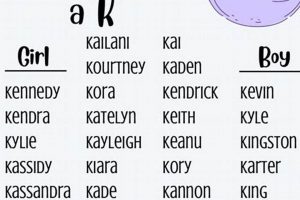
A decorative display of an infant’s given name, typically affixed to a nursery wall, serves as a personalized element within the child’s environment. These displays range from simple letter cutouts to elaborate murals incorporating the name as a central design feature. An example might be wooden letters spelling “Sophia” mounted above a crib or a custom-painted artwork integrating the name into a landscape scene.
Such personalization offers several benefits. It contributes to a sense of identity and belonging for the child, even in their earliest years. The visual reinforcement of their name can aid in recognition and language development. Historically, adorning children’s spaces has been a common practice across cultures, with the inclusion of names representing a modern iteration of this tradition, emphasizing individuality and parental affection. It also serves as a decorative touchstone, enhancing the aesthetic appeal of the nursery.
The following sections will delve into various aspects of this decorative trend, encompassing design considerations, material choices, installation techniques, and safety precautions. The focus will be on creating aesthetically pleasing and secure displays that contribute positively to the child’s environment.
Tips for Displaying an Infant’s Name
Considerations are crucial when planning the installation of a decorative representation of an infant’s name. These tips address key aspects of design, materials, and safety to ensure a harmonious and secure environment.
Tip 1: Prioritize Safety Above All Else. Secure all mounted elements firmly to the wall, utilizing appropriate hardware for the wall type (drywall, plaster, etc.). Avoid small, detachable parts that could pose a choking hazard.
Tip 2: Select Non-Toxic Materials. Opt for paints, adhesives, and construction materials that are certified non-toxic and VOC-free. This minimizes the risk of off-gassing and potential respiratory irritation for the infant.
Tip 3: Choose a Visually Appropriate Font and Size. Ensure the font is legible and age-appropriate. Avoid overly stylized or complex fonts that may be difficult for a young child to recognize. Size the letters proportionally to the wall space and other nursery decor.
Tip 4: Consider Placement Strategically. Position the display away from the crib or changing table to prevent accidental contact or potential hazards from falling objects. Ideally, it should be within the infant’s line of sight from various locations within the room.
Tip 5: Integrate with the Existing Nursery Theme. Coordinate the colors, materials, and overall design with the existing nursery decor to create a cohesive and aesthetically pleasing environment. Avoid clashing styles or overwhelming the space.
Tip 6: Opt for Lightweight Materials. Reduce the risk of injury in the event of a fall by choosing lightweight materials such as foam board, thin wood, or fabric letters. This is particularly important for larger displays.
Tip 7: Securely Attach Any Lighting Elements. Should the display incorporate lighting, ensure all wiring and electrical components meet safety standards and are inaccessible to the child. Consider battery-operated options to eliminate the need for cords.
Adhering to these guidelines will result in a visually appealing and, more importantly, secure and healthy environment for the infant. Careful planning and execution are essential for maximizing the benefits of this personalized decorative element.
The subsequent section will discuss creative ideas and design concepts for incorporating the display into the nursery’s overall aesthetic.
1. Design Aesthetics

The visual design of a personalized name display significantly impacts the overall aesthetic of a nursery. The lettering style, color palette, and surrounding decorative elements all contribute to the room’s atmosphere. A poorly executed design, such as clashing colors or an illegible font, can detract from the intended calming and nurturing environment. Conversely, a thoughtfully designed display enhances the room’s visual appeal, creating a harmonious and inviting space for the infant. For example, a minimalist design featuring a simple sans-serif font in muted tones can contribute to a modern and serene nursery, whereas a more whimsical design with vibrant colors and playful fonts can create a stimulating and cheerful atmosphere.
The selection of materials further influences the aesthetic impact. Wooden letters offer a rustic and natural feel, while metallic finishes provide a contemporary and polished look. The incorporation of additional decorative elements, such as floral accents or geometric shapes, can further personalize the display and integrate it seamlessly with the existing nursery decor. The scale of the display should also be carefully considered; a display that is too large or too small can appear disproportionate and disrupt the visual balance of the room. Consideration should be given to how the display interacts with other wall decor, furniture arrangement, and the overall architectural style of the space.
Ultimately, the goal is to create a visual element that not only displays the infant’s name but also contributes positively to the overall aesthetic experience of the nursery. Paying careful attention to design principles, material choices, and spatial relationships is crucial for achieving this objective. The resulting harmonious and personalized space can then play a key role in supporting the infant’s sense of belonging and contributing to a calming and visually stimulating environment.
2. Material Safety

Material safety is a critical consideration in the creation and installation of any “baby name on wall” display. The materials used directly impact the health and well-being of the infant, making careful selection paramount. The proximity of the display to the child, often within the nursery environment, necessitates the exclusion of potentially harmful substances. Failure to prioritize material safety can lead to adverse health effects, ranging from allergic reactions and skin irritation to respiratory problems and long-term health complications. For instance, paints containing volatile organic compounds (VOCs) can off-gas, releasing harmful chemicals into the air and potentially affecting the infant’s respiratory system. Similarly, materials treated with lead-based paints pose a significant risk of lead poisoning if ingested.
The selection process should prioritize certified non-toxic materials. This includes paints labeled as VOC-free or low-VOC, adhesives that are formaldehyde-free, and wood or composite materials that have been treated with non-toxic preservatives. Fabrics, if used, should be made from natural fibers or certified organic cotton, minimizing the risk of chemical exposure. Furthermore, it is imperative to avoid materials with small, detachable parts that could present a choking hazard. Examples of safe material choices include unfinished wood, water-based paints, and fabrics that meet Oeko-Tex Standard 100 certification, ensuring they are free from harmful substances. Regular inspection of the display is advisable to identify any signs of deterioration or potential hazards, such as peeling paint or loose components.
In conclusion, the integration of material safety considerations into the “baby name on wall” design process is non-negotiable. By prioritizing the use of non-toxic, durable, and securely fastened materials, the risk of adverse health effects can be minimized, creating a safe and healthy environment for the infant. Challenges in implementation may arise from cost considerations or limited access to certified materials; however, the long-term health benefits outweigh these obstacles. This careful attention to material selection underscores the importance of parental responsibility in creating a nurturing and protective environment.
3. Installation Security

The stability and secure attachment of a “baby name on wall” display are paramount, directly impacting the infant’s safety. Inadequate installation presents a tangible risk of the display detaching from the wall, potentially causing injury. The severity of the injury can range from minor abrasions to more significant harm, depending on the size and weight of the object. The causal relationship is direct: insufficient anchoring leads to instability, culminating in a potential hazard. Therefore, “Installation Security” is not merely an ancillary consideration but an integral component of any such decorative element within a nursery.
Several real-life incidents underscore the importance of secure installation. Cases exist where poorly mounted decorations, including name displays, have fallen onto infants, necessitating medical intervention. These incidents often stem from using inappropriate hardware, failing to locate wall studs for support, or neglecting to account for the weight of the display. Proper installation techniques include using wall anchors designed for the specific wall type (drywall, plaster, etc.), ensuring screws or nails are of sufficient length and gauge, and, when possible, attaching the display directly to wall studs. Furthermore, regular inspections are crucial to identify any signs of loosening or instability, allowing for timely corrective action.
In conclusion, the understanding of “Installation Security” principles is essential for mitigating the inherent risks associated with “baby name on wall” displays. Challenges may arise from varying wall construction types or a lack of familiarity with proper installation techniques; however, these challenges can be addressed through careful planning, the use of appropriate hardware, and, if necessary, seeking professional assistance. Prioritizing installation security safeguards the infant’s well-being and reinforces the responsible creation of a safe nursery environment.
4. Personalization Impact

The presence of an infant’s name prominently displayed in their environment, specifically a “baby name on wall” installation, carries a demonstrable “Personalization Impact.” This impact stems from the inherent human desire for recognition and belonging, a desire that begins to develop from infancy. A visual representation of the child’s name serves as a constant affirmation of their identity, fostering a sense of self-awareness and connection to their surroundings. This early reinforcement can positively influence the child’s self-esteem and emotional security. The cause-and-effect relationship is evident: the deliberate act of personalization, through the “baby name on wall,” directly contributes to the child’s developing sense of self. The importance of “Personalization Impact” is underscored by the understanding that a child’s environment shapes their cognitive and emotional development. Examples include instances where personalized spaces have been shown to reduce anxiety and promote a sense of calm in young children. The practical significance lies in recognizing the potential of the nursery environment to contribute positively to the child’s overall well-being.
Further analysis reveals that the “Personalization Impact” extends beyond simple name recognition. The design choices made in creating the “baby name on wall,” such as font style, color scheme, and accompanying imagery, also contribute to the overall message conveyed to the child. A thoughtfully designed display communicates not only the child’s name but also the parents’ values and aesthetic preferences, subtly influencing the child’s developing sensibilities. For instance, a display featuring nature-themed imagery alongside the child’s name can instill an appreciation for the natural world. Similarly, the use of calming colors and soft textures can promote a sense of tranquility. This demonstrates that the “baby name on wall” is not merely a decorative element but a potential tool for early childhood education and development. Applications can be seen in nurseries designed to promote specific skills or values, such as creativity, literacy, or cultural awareness.
In summary, the “Personalization Impact” of a “baby name on wall” is a significant factor in shaping a child’s early development. By creating a personalized environment, parents can foster a sense of identity, security, and belonging in their child. Challenges in implementation may include balancing aesthetic preferences with developmental considerations; however, the long-term benefits of a thoughtfully personalized space outweigh these challenges. Recognizing and harnessing the “Personalization Impact” represents a proactive approach to nurturing a child’s cognitive and emotional growth, contributing to a positive and supportive environment.
5. Developmental Consideration

Developmental Consideration constitutes a fundamental aspect of designing and implementing a “baby name on wall” display. The display’s characteristics including font style, color choices, and placement exert an influence on the infant’s developing visual perception and cognitive skills. A poorly designed display, one that disregards these considerations, may fail to engage the infant’s attention or, worse, introduce visual or cognitive confusion. The causal link is direct: design choices aligned with developmental stages promote engagement, while those that are misaligned may hinder it. The importance of Developmental Consideration as a component of “baby name on wall” is underscored by the understanding that early visual and cognitive stimulation plays a crucial role in neural development. Examples of effective design choices include using high-contrast colors in the early months to capture attention, gradually introducing more complex color palettes as the infant’s visual acuity improves, and employing simple, clear fonts that are easily recognizable. The practical significance of this understanding lies in the potential to leverage the “baby name on wall” display as a tool to support early cognitive development.
Further analysis reveals that Developmental Consideration extends beyond purely visual elements. The selection of materials and the overall aesthetic of the display also contribute to the infant’s sensory experience and cognitive processing. For instance, the use of textured materials can provide tactile stimulation, while the incorporation of interactive elements, such as movable letters or hidden pictures, can encourage exploration and problem-solving. The height and placement of the display relative to the crib or changing table should be carefully considered to ensure that it is within the infant’s field of vision and accessible for visual exploration. Moreover, the surrounding environment, including the overall color scheme and lighting conditions of the nursery, should be taken into account to create a cohesive and stimulating sensory experience. The application of these principles can be observed in nurseries designed to promote specific developmental goals, such as language acquisition, spatial reasoning, or artistic expression.
In summary, Developmental Consideration is an indispensable element of “baby name on wall” design. By prioritizing developmentally appropriate design choices, parents and caregivers can create a visually stimulating and cognitively engaging environment that supports the infant’s growth and development. Challenges in implementation may include balancing aesthetic preferences with developmental requirements; however, the long-term benefits of a thoughtfully designed display far outweigh these challenges. Addressing the “Developmental Consideration” ensures responsible implementation and enhancement to a positive and supportive environment for the infant.
Frequently Asked Questions
The following section addresses common inquiries regarding the creation, installation, and safety of infant name displays on walls.
Question 1: What are the key safety considerations when installing a “baby name on wall” display?
Prioritize secure attachment to the wall using appropriate hardware for the wall type. Avoid small, detachable parts that present a choking hazard. Ensure all materials are non-toxic and VOC-free.
Question 2: What types of materials are safest for a “baby name on wall” display?
Opt for materials such as unfinished wood, water-based paints, and fabrics certified as non-toxic. Avoid materials containing lead, phthalates, or formaldehyde.
Question 3: How can a “baby name on wall” display contribute to an infant’s development?
The display can aid in name recognition and promote a sense of identity and belonging. Select fonts and colors that are developmentally appropriate for infant visual perception.
Question 4: What are some common mistakes to avoid when designing a “baby name on wall” display?
Avoid overly complex fonts that are difficult to read. Ensure the display is proportionally sized for the wall space. Steer clear of clashing colors that create a visually jarring effect.
Question 5: How high should a “baby name on wall” display be placed?
Consider the infant’s line of sight from various locations within the nursery. Position the display away from the crib to prevent accidental contact.
Question 6: How often should a “baby name on wall” display be inspected for safety?
Regular inspections are recommended to identify any signs of loosening, damage, or potential hazards. Corrective action should be taken promptly to maintain safety.
Careful attention to these factors will ensure a safe, aesthetically pleasing, and developmentally beneficial “baby name on wall” display.
The subsequent section will provide resources for finding design inspiration and sourcing materials for “baby name on wall” projects.
Conclusion
This exploration of “baby name on wall” installations has underscored the importance of prioritizing safety, developmental appropriateness, and aesthetic harmony. The creation of such displays necessitates careful consideration of materials, installation techniques, and design choices to ensure a secure and stimulating environment for the infant. The information presented emphasizes that these decorative elements should be more than mere ornamentation; they should actively contribute to the child’s sense of identity and well-being.
The effective implementation of a “baby name on wall” display requires a commitment to informed decision-making and responsible execution. Future advancements in material science and design principles may offer further opportunities to enhance the safety and developmental benefits of these installations. Recognizing the potential impact of the environment on a child’s formative years is crucial for creating spaces that foster growth, security, and a positive sense of self.