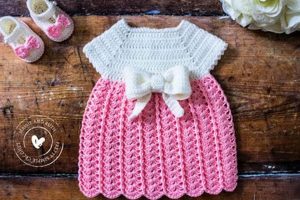
A design guide for crafting miniature footwear for infants. Such guides provide step-by-step instructions, often including material lists and sizing information, enabling individuals to create custom, soft shoes suitable for newborns and young babies. These instructions can range from simple, beginner-friendly designs to more complex and decorative styles.
The creation of these tiny garments offers practical benefits, providing warmth and protection for delicate feet. Furthermore, the act of handcrafting these items can foster a sense of accomplishment and personal connection. Historically, the creation of such items was a common practice, passed down through generations, and served as both a practical necessity and a demonstration of skill and care. Today, they represent a blend of functionality and personalized artistry.
The subsequent sections will delve into the various considerations involved in selecting appropriate materials, understanding sizing and construction techniques, and exploring the diverse range of designs available for these handcrafted infant accessories.
Essential Construction Insights
The following section provides crucial considerations for successfully executing miniature footwear designs for infants. Attention to detail and material selection are paramount for ensuring both comfort and safety.
Tip 1: Select Soft, Natural Materials: Prioritize yarns made from materials such as merino wool, cotton, or bamboo. These fibers are gentle against a baby’s sensitive skin and minimize the risk of irritation. Avoid synthetic materials that may cause allergies or discomfort.
Tip 2: Prioritize Seamless Construction: Minimize or eliminate seams where possible, particularly around the toes and heels. Seams can cause rubbing and discomfort. Consider techniques like crocheting in the round or knitting seamless designs.
Tip 3: Accurate Sizing is Crucial: Consult reliable sizing charts or measurements specific to infant footwear. Creating an item that is too small restricts movement, while one that is too large poses a potential safety hazard. Always err on the side of slightly larger rather than too small.
Tip 4: Secure Fastenings are Essential: If the design includes fastenings such as buttons or ties, ensure they are securely attached to prevent detachment, which could present a choking hazard. Consider alternatives like velcro or knitted ties that are less likely to detach.
Tip 5: Avoid Embellishments that Pose Risks: Refrain from adding small embellishments such as beads, sequins, or decorative buttons. These items can easily detach and become a choking hazard. Simplicity is often the safest and most practical approach.
Tip 6: Test for Yarn Security: After completing the footwear, gently tug on all yarn ends and knots to ensure they are secure. Weave in all loose ends meticulously to prevent unraveling and potential hazards.
These guidelines emphasize the importance of prioritizing safety, comfort, and durability when creating miniature footwear. Adherence to these suggestions will result in a product that is both aesthetically pleasing and practical for infant use.
The concluding section will summarize the key aspects discussed and offer final recommendations for maximizing success in crafting personalized infant footwear.
1. Yarn Weight and Infant Footwear Designs

Yarn weight is a fundamental determinant in the creation of infant footwear. The chosen weight directly influences the size, texture, and overall suitability of the finished item. Proper yarn selection ensures comfort, warmth, and safety for the infant. Deviations from the recommended yarn weight can lead to significant discrepancies in sizing and fabric density.
- Impact on Finished Size
A heavier yarn, such as worsted weight, will produce a larger, denser item compared to a finer yarn like fingering weight, assuming the same stitch count and construction. Using a bulky yarn may result in footwear that is too large and cumbersome for a newborn, while a very fine yarn might create an item that lacks sufficient warmth and structure.
- Effect on Fabric Density and Warmth
Yarn weight affects the tightness of the knitted or crocheted fabric. Thicker yarns generally create denser fabrics, providing increased warmth and protection from the elements. However, excessively dense fabrics can restrict airflow and lead to overheating. Conversely, lighter-weight yarns produce more open, breathable fabrics, suitable for warmer climates, but potentially lacking in insulation for colder temperatures.
- Influence on Drape and Texture
The drape and texture of the finished item are also influenced by yarn weight. Finer yarns typically produce a softer, more delicate drape, ideal for creating flexible and comfortable footwear. Heavier yarns tend to create stiffer, more structured fabrics, which may be less comfortable against a baby’s sensitive skin.
- Compatibility with Design Complexity
Complex stitch patterns and intricate designs are often better suited to finer yarn weights. The finer gauge allows for greater detail and definition in the stitch work. Simpler designs, on the other hand, can be effectively executed with a wider range of yarn weights. However, excessively heavy yarns may obscure the detail of more complex patterns.
The careful selection of yarn weight is thus critical for achieving the desired outcome. The chosen weight must align with the intended size, function, and overall aesthetic of the infant footwear design. Consideration must be given to the local climate, the infant’s age, and the intended use of the item. A well-considered yarn weight ensures a comfortable, safe, and aesthetically pleasing result.
2. Needle Size and Infant Footwear Designs

Needle size is a critical parameter in crafting infant footwear, directly impacting the resulting dimensions, fabric density, and overall suitability of the item. Careful consideration of needle size is essential for achieving the intended fit and comfort.
- Impact on Gauge and Sizing
Needle size dictates the gauge (stitches and rows per unit of measurement) of the knitted fabric. Using a larger needle than recommended for a given yarn will result in a looser gauge and a larger finished item. Conversely, a smaller needle will produce a tighter gauge and a smaller item. Accurate gauge is paramount for achieving the intended size and fit according to the selected design.
- Effect on Fabric Density and Texture
The needle size also influences the density and texture of the knitted fabric. Smaller needles generally create a denser, firmer fabric, providing increased durability and warmth. Larger needles produce a more open, drapey fabric, which may be softer but less insulating. The desired fabric density should align with the intended purpose and climate for which the footwear is designed.
- Influence on Stitch Definition
Needle size can impact the clarity and definition of stitch patterns. Smaller needles tend to enhance the definition of intricate stitch patterns, while larger needles may cause the stitches to appear blurred or less distinct. The complexity of the design should be considered when selecting the appropriate needle size.
- Consideration of Yarn Weight and Fiber Type
The selection of needle size must be coordinated with the yarn weight and fiber type. Each yarn weight has a recommended range of needle sizes. Deviation from this range can lead to unsatisfactory results. For example, using a needle size that is too large for a fine yarn will produce a loose, gappy fabric, while using a needle size that is too small for a bulky yarn will result in a stiff, board-like fabric. The fiber content of the yarn also influences the optimal needle size, as some fibers, such as wool, are more forgiving than others, such as cotton.
The appropriate needle size is thus inextricably linked to the overall success of any infant footwear project. Adherence to recommended needle sizes, coupled with careful gauge swatching, ensures accurate sizing, appropriate fabric density, and optimal stitch definition. The chosen needle size must be aligned with the selected yarn weight, fiber type, and design complexity to achieve the desired outcome of a comfortable, well-fitting, and aesthetically pleasing item.
3. Stitch glossary

A stitch glossary serves as a critical reference tool for individuals undertaking infant footwear projects. The glossary defines the specific knitting or crochet techniques required for pattern execution. Comprehension of these techniques is paramount for successful project completion and accurate reproduction of the intended design.
- Deciphering Pattern Terminology
Glossaries clarify abbreviations and specialized terms commonly used in pattern writing. For example, “K2tog” indicates “knit two stitches together,” a decrease technique. “Sc” represents “single crochet,” a fundamental crochet stitch. Understanding these abbreviations is essential for accurately interpreting and executing the instructions of a given design. Without such understanding, errors in stitch execution are highly probable, leading to deviations from the intended dimensions and appearance.
- Visualizing Unfamiliar Techniques
Effective stitch glossaries often include visual aids such as diagrams or photographs. These visuals demonstrate the step-by-step process of executing each stitch. For example, a diagram of the “slip stitch bind off” can clarify the process of securing the final row of stitches. Visual aids are particularly beneficial for novice knitters and crocheters, enabling them to learn new techniques more readily. These aids minimize ambiguity and promote accurate stitch execution.
- Ensuring Consistent Stitch Formation
Glossaries define the precise method for forming each stitch. For instance, a glossary may specify whether to work a knit stitch through the front loop or the back loop, a distinction that significantly affects the texture of the finished fabric. Consistent stitch formation is vital for achieving a uniform and aesthetically pleasing result. Discrepancies in stitch formation can create irregularities in the fabric, detracting from the overall appearance of the item.
- Adapting to Variations in Style
Variations exist in pattern writing conventions across different regions and designers. A comprehensive glossary can address these variations, clarifying any potential ambiguities. For instance, a glossary might explain different methods for increasing or decreasing stitches, highlighting the advantages and disadvantages of each approach. This allows individuals to adapt patterns to their preferred style and achieve consistent results regardless of the pattern source.
In summary, a stitch glossary is an indispensable resource for crafting infant footwear. It provides the necessary information to decipher pattern terminology, visualize unfamiliar techniques, ensure consistent stitch formation, and adapt to variations in pattern writing conventions. By utilizing a comprehensive stitch glossary, individuals can confidently execute intricate designs and achieve professional-quality results in their infant footwear projects.
4. Gauge Accuracy and Infant Footwear

Gauge accuracy is a foundational element in the successful execution of any infant footwear design. Gauge, defined as the number of stitches and rows per a specific unit of measurement (typically inches or centimeters), directly determines the final dimensions of the crafted item. Inaccurate gauge leads to discrepancies between the intended size and the actual size, rendering the footwear either too small, restricting the infant’s foot, or too large, posing a safety hazard due to potential slippage. The precision of gauge is particularly critical in infant wear, where fit and comfort are paramount for proper foot development and safety.
The relationship between gauge accuracy and infant footwear can be illustrated through a practical example: A design specifies a gauge of 6 stitches per inch in stockinette stitch using a particular yarn and needle size. If the individual crafting the footwear achieves a gauge of only 5 stitches per inch, the resulting piece will be significantly larger than the intended dimensions. Consequently, the footwear might not fit the intended age range, necessitating adjustments to the pattern or a complete restart. Conversely, achieving a gauge of 7 stitches per inch would result in a smaller piece, potentially causing discomfort or restricting movement. Furthermore, inconsistent gauge throughout the project can result in misshapen items, impacting the overall aesthetic and functionality. Mitigation strategies include creating a gauge swatch, a sample piece worked in the specified stitch pattern, measuring the resulting gauge, and adjusting needle size to achieve the specified gauge before commencing the main project.
In conclusion, achieving accurate gauge is not merely a suggestion but a requirement for creating safe and well-fitting infant footwear. The potential consequences of inaccurate gauge include discomfort, restricted movement, and potential safety hazards. While achieving the precise gauge may present challenges, particularly for novice crafters, the benefits of accurate sizing and a well-proportioned finished product far outweigh the effort required. Mastery of gauge techniques is a fundamental skill for anyone involved in crafting infant garments, ensuring both the safety and the aesthetic appeal of the final product.
5. Sizing options

The inclusion of varied sizing options within a miniature footwear design fundamentally dictates its utility and broader applicability. Absence of diverse sizes limits the design’s target demographic and overall practicality. Design guides lacking comprehensive sizing specifications inherently restrict their user base to a narrow age range, diminishing their market appeal and long-term relevance. Consideration of foot length and width measurements is paramount for inclusivity.
For example, a design that offers sizes corresponding to premature infants, newborns, and infants up to twelve months provides a significantly broader range of utility than a design that only caters to newborns. A design incorporating options for wider feet accommodates a larger proportion of the infant population. Failure to account for these variations results in discomfort or improper fit, negating the footwear’s intended purpose. Clear, unambiguous sizing charts with foot length measurements, coupled with corresponding age ranges, are essential elements of a comprehensive design.
In conclusion, diverse sizing options are an indispensable component of effective designs. The presence of such options enhances design versatility, broadens its target demographic, and ultimately contributes to its practical value. Designs that neglect this crucial aspect suffer from limited utility and decreased appeal. The creation of comprehensive and inclusive sizing specifications is therefore a primary consideration in the development of functional and marketable designs.
6. Schematic diagram

A schematic diagram represents a graphical depiction of the completed miniature footwear, providing essential dimensional information that written instructions alone cannot adequately convey. It functions as a visual blueprint, displaying key measurements such as foot length, width, ankle circumference, and total height of the item. The diagram serves as a visual confirmation of the intended proportions and assists in verifying the accuracy of the finished product. The absence of a schematic diagram increases the risk of misinterpretation of written instructions, leading to inaccuracies in the final creation. For instance, a pattern may specify a particular number of rows to be worked, but without a visual representation of the resulting height, the crafter lacks a crucial reference point. This can lead to items that are either too short, affecting the fit, or too tall, altering the intended aesthetic.
The inclusion of a schematic diagram is particularly valuable when dealing with complex shaping or intricate stitch patterns. For example, a design featuring a decorative cuff or a contoured heel benefits significantly from a visual representation of these elements. The diagram illustrates the precise angle and curve of the shaping, offering a clear understanding of the desired outcome. Real-world examples include designs featuring cable patterns or textured stitches, where the diagram clarifies the placement and direction of the stitches, reducing the potential for errors. Moreover, a schematic diagram allows for quick assessment of the overall design aesthetic, enabling the crafter to determine whether the intended shape and proportions align with their expectations before investing significant time and resources. Designs incorporating multiple components, such as straps or embellishments, benefit from a visual depiction of the placement and attachment points of these elements, ensuring accurate assembly.
In conclusion, the schematic diagram is an indispensable component of a comprehensive footwear design, serving as a vital visual aid that complements and clarifies written instructions. Its inclusion reduces the risk of misinterpretation, enhances accuracy, and facilitates the creation of well-proportioned and aesthetically pleasing items. While written instructions provide the necessary details for stitch execution, the schematic diagram offers a crucial visual context, bridging the gap between textual description and tangible result. The absence of a schematic diagram represents a significant deficiency in the design, increasing the potential for errors and diminishing the overall user experience.
7. Written instructions

Written instructions constitute the core narrative of a miniature footwear design, detailing the precise steps required to transform raw materials into a finished product. Their clarity, accuracy, and comprehensiveness directly impact the success or failure of any crafting endeavor. They provide the essential roadmap, guiding the user through each stage of the process, from initial stitch to final embellishment. The effectiveness of the design is fundamentally dependent on the quality of these instructions. A poorly written set of instructions, characterized by ambiguity, omissions, or errors, inevitably leads to frustration and unsatisfactory results. Conversely, well-crafted instructions empower individuals of varying skill levels to confidently undertake and complete the project.
The impact of written instructions on the creation of miniature footwear can be exemplified through the analysis of common challenges encountered during crafting. Consider a scenario where the instructions fail to clearly specify the method for decreasing stitches when shaping the toe of the item. This ambiguity can result in a pointed or misshapen toe, deviating from the intended design. Similarly, if the instructions lack explicit guidance on joining the sole to the upper, the resulting seam may be uneven or poorly secured, compromising the durability and aesthetic appeal of the final product. Real-world examples abound, demonstrating the correlation between the quality of written instructions and the overall success rate of individuals undertaking such projects. Designs accompanied by meticulously detailed and easily understandable instructions consistently yield higher rates of completion and satisfaction among users. Designs lacking this level of detail often lead to abandoned projects and negative feedback.
In conclusion, written instructions represent a critical determinant of the value and usability of any miniature footwear design. Their quality directly influences the likelihood of successful project completion and user satisfaction. Clear, accurate, and comprehensive instructions empower individuals to create well-fitting, aesthetically pleasing, and durable items. Conversely, poorly written instructions lead to frustration, errors, and ultimately, a diminished perception of the design’s worth. The development and refinement of written instructions should therefore be prioritized as a core aspect of the design process, ensuring the accessibility and success of the project for a wide range of users.
Frequently Asked Questions
This section addresses common inquiries regarding miniature footwear guides, providing clarity on essential aspects for successful execution.
Question 1: What constitutes a suitable yarn for infant footwear?
Yarns composed of natural fibers, such as merino wool, cotton, or bamboo, are generally recommended. These materials offer softness, breathability, and reduced risk of allergic reactions. Avoidance of synthetic fibers is advisable due to their potential for irritation.
Question 2: How critical is gauge accuracy in infant footwear construction?
Gauge accuracy is of paramount importance. Discrepancies between the intended gauge and the actual gauge will result in variations in size, potentially rendering the footwear unsuitable for the intended recipient. Creation of a gauge swatch is essential.
Question 3: What safety precautions should be considered when crafting infant footwear?
The primary safety concern is the avoidance of small, detachable embellishments that present a choking hazard. Secure attachment of all components is imperative. Seams should be minimized or eliminated to prevent irritation.
Question 4: How can sizing discrepancies be minimized when following a design?
Consult reliable sizing charts specific to infant footwear. Measure the infant’s foot length accurately and compare it to the chart. Adjust needle or hook size to achieve the specified gauge. Err on the side of slightly larger rather than too small.
Question 5: What is the significance of a schematic diagram in a miniature footwear guide?
A schematic diagram provides a visual representation of the completed item, indicating key dimensions and proportions. This visual aid enhances clarity and assists in verifying the accuracy of the final product, complementing the written instructions.
Question 6: Are written instructions sufficient for creating intricate miniature footwear designs?
While comprehensive written instructions are essential, visual aids such as diagrams or photographs can significantly enhance clarity, particularly when dealing with complex stitch patterns or shaping techniques. A combination of detailed written instructions and visual support is optimal.
This FAQ section provides essential insights into considerations for effectively utilizing designs for miniature footwear. Adherence to these guidelines will contribute to the successful creation of safe, comfortable, and aesthetically pleasing items.
The following section will explore available resources and techniques for customizing infant footwear designs.
Conclusion
This exploration of the “baby bootie pattern” domain has underscored several critical aspects. The selection of appropriate materials, particularly natural fibers, is paramount for infant comfort and safety. Precise adherence to gauge specifications and the utilization of comprehensive sizing charts are essential for achieving accurate fit. The inclusion of schematic diagrams and clear written instructions further enhances the usability and effectiveness of any design.
The creation of miniature footwear, guided by a “baby bootie pattern,” represents a confluence of practicality and artistry. While the functional purpose of providing warmth and protection remains central, the opportunity for personalization and creative expression is significant. Designers and crafters must prioritize safety and accuracy to ensure the well-being of the infant. Future developments in this field may focus on innovative materials and construction techniques, further enhancing the comfort, durability, and aesthetic appeal of these handcrafted items. The meticulous execution of each “baby bootie pattern” directly impacts the well-being of the child.