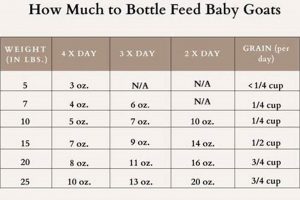
A visual aid used to schedule and track the nutritional intake of neonatal caprines is a critical management tool. It typically details the volume and frequency of milk replacer or colostrum administration based on the kid’s age and weight. For instance, a chart may specify feeding a newborn goat kid, weighing approximately 8 pounds, 4-6 ounces of colostrum four times daily for the first 24 hours.
Employing this schedule offers several benefits for goat health and survival rates. It helps ensure adequate nutrition, particularly in situations where the dam cannot provide sufficient milk or multiple kids are born. This approach aids in minimizing the risk of hypoglycemia and facilitates consistent growth. Historically, such organized feeding regimens have proven instrumental in commercial goat dairies and in rescue or rehabilitation contexts where attentive, controlled feeding is paramount.
The following sections will elaborate on creating customized feeding protocols, selecting appropriate milk replacers, and addressing potential challenges encountered during bottle-feeding.
Feeding Protocol Optimization
The ensuing guidance aims to refine the utilization of a structured feeding regimen for optimal kid health and growth.
Tip 1: Colostrum Administration: Prioritize colostrum delivery within the first 12 hours of life. This provides crucial antibodies for immune system development and disease resistance. A minimum of 10% of the kids body weight in colostrum should be ingested during this period.
Tip 2: Gradual Milk Replacer Transition: Implement a gradual transition from colostrum to milk replacer over 2-3 days to minimize digestive upset. Mixing colostrum and milk replacer in decreasing proportions can facilitate this transition.
Tip 3: Consistent Milk Replacer Preparation: Adhere strictly to the manufacturer’s instructions when mixing milk replacer. Variations in concentration can lead to digestive issues or nutrient deficiencies.
Tip 4: Weight Monitoring: Regularly weigh goat kids to assess growth rate and adjust feeding volumes as needed. Stunted growth may indicate inadequate caloric intake or underlying health problems requiring veterinary attention.
Tip 5: Bottle Hygiene: Maintain stringent hygiene practices for bottles and nipples to prevent bacterial contamination. Thorough cleaning and disinfection are essential after each feeding.
Tip 6: Observation for Bloat: Monitor for signs of bloat, such as abdominal distension and discomfort. Adjust feeding frequency and volume to prevent overconsumption, which can contribute to bloat development.
Tip 7: Scheduled Feeding Times: Establish consistent feeding times to regulate the kid’s digestive system. This can minimize the risk of digestive upset and promote efficient nutrient absorption.
Adhering to these recommendations will maximize the efficacy of planned feeding, contributing significantly to enhanced kid health and vitality.
The subsequent segment will address potential complications during assisted feeding and propose solutions.
1. Colostrum intake

Colostrum intake forms a cornerstone of a successful planned nutritional schedule for newborn goat kids. The adequacy and timing of colostrum administration directly impact the kid’s immune system development and overall survival. A well-designed planned feeding regimen typically incorporates specific colostrum-feeding guidelines, detailing the volume, frequency, and timing of administration within the first 24 hours of life. Inadequate colostrum intake leaves the kid vulnerable to infections and increases mortality rates, highlighting the direct cause-and-effect relationship.
The inclusion of colostrum guidelines within the “baby goat bottle feeding chart” ensures that caregivers prioritize this crucial first feeding. For example, the chart might specify administering 10% of the kid’s body weight in colostrum within the first six hours of life, followed by another feeding within 12 hours. In scenarios where the dam’s colostrum is insufficient, frozen colostrum or a commercially available colostrum supplement must be used. Without the structure and emphasis provided by the chart, this critical window for passive immunity transfer might be missed, leading to significant health consequences.
In summary, the careful integration of colostrum intake protocols into a feeding schedule is indispensable for raising healthy goat kids. These protocols serve to safeguard the animal’s health by ensuring that they receive timely and adequate immune support. Challenges in ensuring sufficient intake can arise from rejection by the kid, or from the mother not producing an appropriate amount of colostrum. Overcoming these hurdles requires vigilant monitoring, proactive supplementation, and, ultimately, underscores the broader objective of promoting the well-being and viability of young goats.
2. Replacer consistency

Replacer consistency, referring to the uniform mixture of milk replacer powder and water, is a critical parameter directly impacting the efficacy of a planned feeding strategy for neonatal caprines. Deviations from recommended mixing ratios can lead to nutritional imbalances and digestive disturbances, undermining the intended benefits of a controlled feeding schedule.
- Nutritional Accuracy
Achieving the correct milk replacer consistency ensures that goat kids receive the precise caloric and nutrient content stipulated in the formulation. Overly diluted replacer may result in inadequate energy intake, leading to stunted growth and weakened immune function. Conversely, overly concentrated replacer can cause digestive upset, diarrhea, and dehydration, negating the benefits of a structured feeding regimen designed to promote healthy development.
- Digestive Health
Appropriate consistency is essential for optimal digestive function. Milk replacer that is too thick can be difficult for young kids to digest, leading to abdominal discomfort, bloating, and potentially fatal complications like enterotoxemia. A consistent mixture allows for predictable digestion and absorption of nutrients, supporting a healthy gut microbiome and minimizing digestive distress.
- Feeding Efficiency
A properly mixed replacer flows smoothly through the bottle nipple, allowing the kid to feed efficiently and consume the required volume of milk in a reasonable timeframe. Inconsistent mixtures, characterized by clumping or separation, can obstruct the nipple and impede feeding, leading to frustration for both the caregiver and the kid. This can result in inadequate intake and increased stress, undermining the objective of providing consistent nutrition.
- Predictable Outcomes
Maintaining consistent replacer mixing procedures promotes predictable growth rates and overall health outcomes. Variations in consistency introduce uncontrolled variables that can confound the interpretation of the feeding chart’s data. By adhering to the manufacturer’s instructions and employing precise measuring techniques, caregivers can ensure that the outcomes observed are directly related to the intended feeding schedule, allowing for informed adjustments and optimization of the nutritional plan.
The aforementioned aspects of replacer consistency must be considered alongside a baby goat bottle feeding chart. A well-crafted chart will detail the proper water-to-powder ratios, emphasizing the need for precision. It will also guide caregivers to monitor for signs of digestive distress, such as diarrhea or bloating, which can signal an improperly mixed replacer. Ultimately, by prioritizing replacer consistency, caregivers can maximize the benefits of a structured feeding schedule and ensure the healthy development of neonatal goats.
3. Feeding frequency

Feeding frequency, a critical component of a controlled nutrition protocol, dictates the intervals at which neonatal caprines receive sustenance. A baby goat bottle feeding chart serves as a visual representation and practical guide for determining this frequency, ensuring that young goats receive adequate nutrition at appropriate intervals. The underlying principle is that consistent, appropriately spaced feedings contribute significantly to the kid’s digestive health, growth rate, and overall well-being. Disruptions to this schedule, whether through excessively long or short intervals, can lead to digestive upset, hypoglycemia, or inadequate nutrient absorption.
The feeding chart typically delineates feeding frequency based on the kid’s age and weight. For example, a chart might prescribe feeding a newborn kid every 3-4 hours, while a week-old kid might be fed every 6 hours. This progressive reduction in feeding frequency aligns with the developing kid’s digestive capacity and nutrient requirements. In practical terms, adherence to this feeding schedule ensures that the kid’s stomach is not overloaded, preventing bloat and promoting efficient nutrient processing. Moreover, consistent intervals minimize the risk of hypoglycemia, a common threat to newborn goats, by maintaining a steady supply of glucose to the bloodstream.
In conclusion, feeding frequency, as guided by a planned nutritional schedule, is instrumental in optimizing the health and development of neonatal goats. The chart provides a structured framework for ensuring that kids receive the necessary nutrition at appropriate intervals, minimizing the risk of digestive upset, hypoglycemia, and inadequate growth. Effective implementation requires diligent observation of the kid’s condition and adjustments to the feeding schedule as needed, recognizing that individual needs may vary. A conscientious approach will yield improved health and survival rates.
4. Weight monitoring

Weight monitoring serves as a critical feedback mechanism for evaluating the effectiveness of any caprine planned nutrition protocol. A baby goat bottle feeding chart provides a structured framework for nutrient delivery, but weight gain data offers empirical evidence regarding whether the prescribed feeding regimen meets the individual kid’s needs. Insufficient weight gain, despite adherence to the chart, indicates a need to re-evaluate replacer concentration, feeding frequency, or to investigate potential underlying health issues hindering nutrient absorption. Weight monitoring therefore transforms a static feeding schedule into a dynamic, responsive management tool.
For example, a chart might specify a target weight gain of 0.5 pounds per day. Regular weighing, ideally daily or every other day, allows for tracking actual weight gain against this target. If a kid consistently gains only 0.25 pounds per day, despite consuming the recommended amount of replacer, this discrepancy flags a potential problem. The caregiver might then increase the replacer concentration slightly, ensure the kid is consuming all offered milk, or consult a veterinarian to rule out parasites or other conditions affecting nutrient utilization. Conversely, excessive weight gain might necessitate adjustments to prevent obesity or digestive upset.
In summary, weight monitoring is an indispensable component of a holistic feeding strategy. It enables caregivers to assess the efficacy of a designed baby goat bottle feeding chart, identify individual nutritional needs, and make informed adjustments to optimize growth and health. Without regular weight assessment, reliance solely on the chart becomes a passive, potentially ineffective approach, failing to account for individual variations and potential underlying health issues. This active management approach provides essential information to ensure the plan is appropriately tailored for each kid’s overall wellbeing.
5. Hygiene protocols

Hygiene protocols are intrinsic to any successful bottle-feeding regimen for neonatal caprines. A planned baby goat bottle feeding chart provides a structured approach to nutritional intake, but its efficacy is contingent upon rigorous adherence to sanitation practices that minimize the risk of bacterial contamination and subsequent illness.
- Bottle and Nipple Sterilization
Thorough cleaning and sterilization of bottles and nipples after each feeding are essential to prevent the proliferation of harmful bacteria. Residual milk provides an ideal medium for bacterial growth, which can lead to digestive upset, diarrhea, and systemic infections in vulnerable goat kids. Sterilization methods include boiling, steaming, or the use of chemical sanitizers specifically designed for infant feeding equipment. A baby goat bottle feeding chart can include a reminder to clean and sterilize feeding equipment after each use, reinforcing this critical practice.
- Milk Replacer Handling
Proper handling and storage of milk replacer are crucial to maintain its quality and prevent contamination. Milk replacer should be stored in a cool, dry place and prepared according to the manufacturer’s instructions, using clean utensils and potable water. Once reconstituted, milk replacer should be refrigerated promptly and discarded after 24 hours. A chart can specify guidelines for safe replacer preparation and storage, including expiration dates and recommended temperatures.
- Hand Washing Practices
Caregivers should practice meticulous hand hygiene before handling bottles, nipples, or milk replacer. Thorough hand washing with soap and water removes transient bacteria that can contaminate feeding equipment and compromise the health of the goat kid. The planned feeding chart might include a directive to wash hands before each feeding session, promoting adherence to this fundamental hygiene practice.
- Environmental Sanitation
Maintaining a clean environment for bottle-feeding contributes to reducing the risk of bacterial exposure. Feeding areas should be kept free of manure, dirt, and other potential contaminants. Regular disinfection of surfaces and equipment minimizes the presence of harmful bacteria, creating a safer environment for feeding young goats. The chart might include periodic reminders to disinfect the feeding area, promoting a clean and sanitary setting.
The incorporation of stringent hygiene protocols, guided by the structured information in a baby goat bottle feeding chart, represents a holistic approach to neonatal caprine nutrition. These hygiene practices, combined with a well-designed feeding schedule, promote healthy growth, minimize the risk of illness, and contribute to improved survival rates in bottle-fed goat kids. Neglecting these aspects will compromise even the most meticulously planned nutrition and jeopardize the health and wellbeing of vulnerable animals.
6. Bloat prevention
Bloat prevention is a crucial consideration in neonatal caprine care, intimately linked to the implementation of a “baby goat bottle feeding chart.” The regulated feeding schedule prescribed by such a chart can either mitigate or exacerbate the risk of bloat, depending on its design and adherence to best practices. Understanding this connection is essential for caregivers aiming to optimize kid health.
- Consistent Feeding Intervals
Regular, appropriately spaced feedings, as detailed in a “baby goat bottle feeding chart,” help prevent overeating and the subsequent rapid fermentation of milk within the rumen. Inconsistent feeding schedules or allowing unrestricted access to milk replacer can lead to engorgement, increasing the likelihood of bloat. A chart promotes controlled intake and minimizes digestive upset.
- Proper Nipple Flow Rate
The flow rate of the bottle nipple can significantly impact bloat development. If the nipple releases milk too quickly, the kid may gulp air along with the milk, contributing to gas accumulation in the rumen. A “baby goat bottle feeding chart” should be accompanied by guidelines on selecting and maintaining nipples with appropriate flow rates, ensuring the kid consumes milk at a manageable pace.
- Upright Feeding Position
Feeding kids in an upright position, as recommended in many caprine care guides, facilitates the natural expulsion of air during feeding. Holding the bottle at an angle that allows the kid to maintain an upright posture minimizes the risk of air ingestion and subsequent bloat. While a “baby goat bottle feeding chart” may not explicitly state this position, it is an implicit element of responsible bottle feeding practice and should be integrated into the feeding routine.
- Post-Feeding Exercise
Gentle exercise or massage after feeding can aid in rumen motility and gas expulsion, reducing the risk of bloat. Lightly massaging the kid’s abdomen can stimulate rumen contractions and facilitate the movement of digesta. While this practice is not typically documented in a “baby goat bottle feeding chart,” it complements the controlled feeding schedule by promoting healthy digestion and preventing gas buildup.
The “baby goat bottle feeding chart” serves as a foundational tool for neonatal caprine nutrition, but its effectiveness hinges on the integration of bloat prevention strategies. Consistent feeding intervals, appropriate nipple flow rates, upright feeding positions, and post-feeding exercise collectively minimize the risk of bloat and promote the healthy development of bottle-fed goat kids. Neglecting these complementary practices can undermine the benefits of a well-designed feeding schedule and compromise kid health.
7. Growth assessment
Growth assessment constitutes an indispensable element in the application of a planned baby goat bottle feeding chart. This assessment, involving regular monitoring of weight and physical condition, provides empirical data reflecting the adequacy of the nutritional regimen outlined in the chart. Deviations from expected growth trajectories, whether indicating stunted development or excessive weight gain, signal a potential misalignment between the prescribed feeding schedule and the individual kid’s requirements. The chart serves as an initial guide, but the animal’s physical response dictates necessary adjustments.
For example, consider a scenario where a planned feeding schedule specifies a milk replacer volume intended to produce a daily weight gain of 0.4 pounds. Consistent underperformance, reflected in actual gains of only 0.2 pounds, necessitates a critical reevaluation. Possible causes include inadequate caloric density of the replacer, insufficient feeding frequency, or underlying health issues hindering nutrient absorption. Conversely, excessively rapid weight gain might indicate overfeeding or an excessively rich replacer formulation. In both scenarios, growth assessment data triggers a modification of the chart’s recommendations, thereby optimizing the nutritional plan for the individual kid. Growth issues also highlight underlying health issues such as parasites or pneumonia.
In summary, growth assessment transforms a static planned baby goat bottle feeding chart into a dynamic tool adaptable to individual caprine needs. Weight monitoring, coupled with vigilant observation of physical condition, provides critical feedback, enabling informed adjustments to the feeding regimen. This iterative process of assessment and adjustment is paramount in ensuring optimal health and maximizing the growth potential of bottle-fed goat kids. The integration of growth data into a practical, working strategy ensures effective animal management.
Frequently Asked Questions Regarding Baby Goat Bottle Feeding Schedules
The following section addresses common inquiries concerning the implementation and interpretation of feeding schedules for bottle-fed neonatal goats.
Question 1: At what age should supplemental bottle feeding commence?
Supplemental bottle feeding is typically initiated when the dam produces insufficient milk, the kid is orphaned, or the kid is failing to thrive despite nursing.
Question 2: What type of milk replacer is most suitable for bottle-fed goat kids?
Goat-specific milk replacer formulations are preferable, though lamb milk replacer may serve as an alternative. Avoid using calf milk replacer due to compositional differences.
Question 3: How should the volume of milk replacer be determined for each feeding?
Begin with approximately 4-6 ounces per feeding for a newborn kid, adjusting the volume based on the kid’s weight, age, and appetite. Monitor for signs of overfeeding, such as diarrhea or bloat.
Question 4: How frequently should neonatal caprines be bottle-fed?
Newborn kids typically require feeding every 3-4 hours. As the kid matures, the feeding frequency can be reduced to 4-6 times daily.
Question 5: What measures should be taken to prevent aspiration pneumonia during bottle feeding?
Ensure the kid is positioned upright during feeding, and allow the kid to control the pace of milk flow. Avoid squeezing the bottle forcefully, which can cause milk to enter the lungs.
Question 6: How can one assess the effectiveness of a planned feeding strategy?
Regularly monitor the kid’s weight gain, body condition, and overall health. Consistent weight gain and absence of digestive upset indicate a successful feeding regimen.
Consistent monitoring and proper adherence to these guidelines will assist in maintaining kid vigor.
The subsequent segment will outline best practices in assisted feeding.
Baby Goat Bottle Feeding Chart
This exploration has underscored the significance of the chart as a structured instrument for neonatal caprine nutrition. The benefits of a well-designed and diligently implemented planned baby goat bottle feeding chart extend to improved kid health, optimized growth rates, and reduced incidence of digestive disorders. Careful attention to colostrum administration, replacer consistency, feeding frequency, weight monitoring, hygiene protocols, bloat prevention, and growth assessment constitutes a holistic approach to assisted feeding.
The responsible application of a baby goat bottle feeding chart necessitates continuous monitoring, informed adjustments, and unwavering adherence to best practices. Diligence will result in healthier animals and sustainable caprine husbandry.