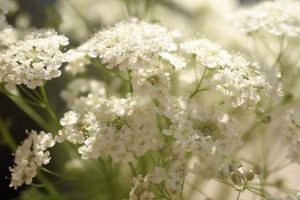
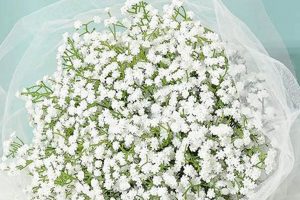
The slender stalk of Gypsophila paniculata, commonly known as baby’s breath, provides structural support for its delicate, airy clusters of small, white or pink blossoms. This component arises from the base of the plant and extends upwards, branching to bear the numerous individual flowers. An example is its use within floral arrangements, where the stem allows for precise placement and stability.
Its value in floristry lies in its ability to add volume and texture to bouquets and other floral designs. Historically, it has been a staple in both formal and informal arrangements, prized for its understated elegance and capacity to complement more prominent blooms. The structure facilitates nutrient and water transport, contributing to the overall health and longevity of the plant and, consequently, the cut flowers.
Understanding the characteristics and proper handling of these supporting structures is crucial for optimizing their use in various applications, from fresh floral designs to dried and preserved arrangements. Subsequent discussions will delve into specific techniques for cutting, conditioning, and preserving to maximize their aesthetic appeal and extend their usability.
Practical Advice Regarding Gypsophila paniculata Stalks
Effective management and utilization of the structural element supporting Gypsophila paniculata‘s blooms is critical for maximizing its aesthetic impact and longevity in floral arrangements.
Tip 1: Harvesting at the Optimal Stage: Cut when approximately half to two-thirds of the blossoms are open. This ensures maximum visual appeal and extends the vase life of the cut specimen.
Tip 2: Proper Hydration Techniques: Immediately after cutting, place the cut stalks in a solution of floral preservative and water. This rehydrates the plant material and provides essential nutrients, delaying wilting.
Tip 3: Stem Pruning and Preparation: Remove any foliage below the water line to prevent bacterial growth, which can impede water uptake and shorten the lifespan of the floral arrangement.
Tip 4: Water Quality Management: Change the water in the vase every two to three days, and re-cut the ends of the stalks at a 45-degree angle to maintain optimal water absorption.
Tip 5: Avoid Direct Sunlight and Excessive Heat: Position the arrangements in a cool location away from direct sunlight to minimize transpiration and prolong freshness. Excessive heat can accelerate dehydration and petal drop.
Tip 6: Drying and Preservation Methods: For dried arrangements, hang the stalks upside down in a dark, well-ventilated area until fully dried. This method preserves the shape and color of the blossoms. Silica gel can also be used for preservation.
Tip 7: Careful Handling During Arrangement: Due to their delicate nature, handle the supporting structures with care during arrangement to avoid breakage. Use appropriate floral wire or tape to provide additional support if necessary.
Adhering to these guidelines can significantly enhance the appearance and prolong the vase life, preserving their contribution to floral designs. Proper preparation and maintenance are essential for fully realizing their potential.
The concluding section will address potential challenges and offer solutions for optimizing the display of Gypsophila paniculata stems in various settings.
1. Structural Support

The capacity to provide structural support constitutes a defining characteristic of the baby’s breath stalk. This element acts as the foundational framework upon which the airy inflorescence is displayed, dictating the plant’s overall form and presentation. Without sufficient rigidity and strength in this component, the delicate blossoms would lack elevation and definition, diminishing their aesthetic impact. The stalk’s verticality allows for the creation of height and volume within floral arrangements. The stalk supports the distribution of the flowers in a balanced manner, preventing clumping or uneven distribution of weight. An illustrative example is found in large floral installations, where the stalk’s load-bearing capacity is essential for maintaining the intended design. The practical significance is found in achieving a stable and visually appealing arrangement with other flowers or by itself.
Further analysis reveals that the internal composition of the stalk, specifically its vascular system and lignified tissues, directly influences its structural integrity. The xylem and phloem are responsible for efficient water and nutrient transport, which is critical for the health and turgidity of the flowers. The lignification of cell walls provides the necessary mechanical strength to withstand bending forces and maintain its upright posture. For instance, florists often select stems with a thicker diameter, recognizing that a more robust structure translates to a longer-lasting and more visually impactful arrangement. Conversely, wilted or damaged stalks compromise the overall stability of the design and accelerate the deterioration of the blooms.
In conclusion, the structural support afforded by the baby’s breath supporting stalk is a pivotal determinant of its value in floristry and ornamental applications. Its ability to bear the weight of the blossoms, maintain their spatial arrangement, and facilitate nutrient transport directly impacts the longevity and visual appeal of the arrangement. Understanding this relationship allows for informed selection and handling of stems, optimizing their contribution to aesthetic compositions and maximizing their usefulness. Challenges associated with stem weakness can be mitigated through proper hydration and supportive techniques, ensuring its continued effectiveness in the floral industry.
2. Water Conduction

Water conduction is a critical physiological process in baby’s breath, directly impacting the plant’s survival and aesthetic qualities when used in floral arrangements. The stalk’s vascular system efficiently transports water and nutrients from the roots to the delicate blossoms, maintaining turgor pressure and supporting cellular functions. Understanding this process is essential for maximizing the longevity and visual appeal of cut stems.
- Xylem Structure and Function
The xylem, a specialized vascular tissue, forms the primary pathway for water transport. Its structure, composed of dead, hollow cells arranged end-to-end, creates continuous conduits that facilitate capillary action and transpiration pull. The efficiency of xylem transport in the baby’s breath supporting structure directly influences the hydration status of the floral display. For example, stems with intact and unobstructed xylem vessels maintain a higher water uptake rate, extending the vase life of the arrangement.
- Transpiration and Water Loss
Transpiration, the process by which water evaporates from the plant’s surface, creates a tension gradient that draws water upwards through the xylem. The rate of transpiration is influenced by environmental factors such as temperature, humidity, and air movement. High transpiration rates can lead to water stress and wilting, particularly in cut stalks. Therefore, strategies to minimize water loss, such as reducing leaf surface area and maintaining adequate humidity, are crucial for preserving stem turgidity.
- Vascular Occlusion and its Mitigation
Vascular occlusion, the blockage of xylem vessels, is a common problem in cut flowers. It can occur due to microbial growth, air embolisms, or the accumulation of debris. Occlusion impedes water uptake and accelerates wilting. Mitigation strategies include recutting the stalk ends under water to remove air bubbles, using floral preservatives to inhibit microbial growth, and maintaining clean water in the vase. For example, submerging the lower part of the stalk in water during transport to minimize exposure to air prevents embolism formation.
- Nutrient Transport and Floral Health
In addition to water, the xylem also transports essential nutrients from the roots to the blooms. These nutrients, including minerals and sugars, are vital for cellular metabolism and maintaining floral health. Floral preservatives often contain nutrients that supplement the plant’s natural reserves, prolonging its lifespan and preserving its vibrant color. Ensuring adequate nutrient availability through proper hydration and supplementation supports the overall vitality and aesthetic appeal of the baby’s breath stalks.
The interconnectedness of these facets underscores the importance of water conduction in determining the health, longevity, and aesthetic value of cut baby’s breath stalks. By understanding and managing these processes, florists and enthusiasts can optimize their use in floral designs and decorations, ensuring that the delicate blossoms retain their beauty and vibrancy for an extended period. The proper application of hydration techniques, coupled with environmental control and preventative measures, can mitigate the challenges associated with water stress and vascular occlusion, preserving the integrity and visual impact of baby’s breath in various arrangements.
3. Floral Arrangement

Floral arrangement, as a distinct art form, relies significantly on the structural and aesthetic contributions of baby’s breath stalks. These supporting elements enhance visual appeal and allow for diverse design possibilities. The subsequent points will delineate the crucial roles.
- Volume and Texture Enhancement
The stalks of baby’s breath contribute significantly to the overall volume and texture of floral arrangements. Their delicate branching structure, adorned with numerous small flowers, creates a light, airy effect that complements larger, more prominent blooms. For instance, in wedding bouquets, baby’s breath is often used to fill gaps between focal flowers, adding depth and visual interest. The presence of the stalks also introduces a textural contrast, softening the sharp lines of other flowers and creating a more harmonious composition. This integration enhances the perceived fullness and sophistication of the entire arrangement.
- Complementary Element
Acting as a valuable complementary element to floral arrangements, the stalks serve to accentuate the colors and forms of focal flowers. The neutral hues of white or pale pink provide a subtle backdrop that does not compete with the primary elements. For instance, when paired with vibrant roses or lilies, baby’s breath creates a visual contrast that draws attention to the main blooms. Its subdued nature allows the colors of the focal flowers to appear more vivid and saturated. This synergistic effect enhances the overall impact of the arrangement, making it more visually appealing and balanced.
- Structural Integrity
The stalk’s structural attributes contribute to the arrangement’s stability and longevity. They provide support to the more delicate blossoms, preventing them from drooping or breaking. For instance, in tall centerpieces, the stalks of baby’s breath can be interwoven with other stems to create a stronger, more resilient structure. This reinforcement ensures that the arrangement maintains its shape and form over time, preserving its aesthetic appeal. The stalks also provide a framework for securing other floral elements, preventing them from shifting or falling out of place.
- Versatility in Design
The stalks lend themselves to a wide range of design styles, from classic and traditional to modern and minimalist. In classic arrangements, baby’s breath is often used to create a romantic and ethereal aesthetic, while in modern designs, it can be used to add a touch of whimsy and informality. For example, in minimalist arrangements, a few sprigs can be used to create a simple yet elegant composition. Their adaptability allows florists to incorporate it into diverse themes and settings, ensuring that the arrangement complements the overall decor and ambiance. This flexibility makes it a valuable asset in creating personalized and memorable floral designs.
These various facets illustrate the indispensable nature of baby’s breath supporting structures within the realm of floral arrangement. The capacity to enhance volume, complement focal elements, provide structural integrity, and adapt to diverse design styles solidifies its role as a staple in floristry. Proper handling and integration of these stalks are crucial for realizing their full potential in creating visually stunning and long-lasting floral displays.
4. Preservation Medium

The role of the Gypsophila paniculata supporting structure as a preservation medium hinges on its inherent physical properties and cellular composition, which dictate its response to various preservation techniques. The process aims to arrest the natural decomposition, maintain structural integrity, and retain the aesthetic attributes of the stalk. The success of preservation is directly correlated to the method employed and its interaction with the plant material. For example, silica gel, a desiccant, rapidly extracts moisture from the stalk, inhibiting microbial growth and preserving its form. Air drying, a slower method, achieves similar results, albeit with potentially more color loss. Therefore, the choice of the preservation medium directly affects the end product’s appearance and longevity.
The practical applications of using the Gypsophila paniculata supporting element as a preservation medium are diverse, spanning from decorative arrangements to scientific specimens. Dried stalks are frequently incorporated into long-lasting floral designs, adding a delicate and ethereal touch. Furthermore, preserved specimens serve as valuable resources in botanical studies, enabling detailed analysis of plant morphology and anatomy. For instance, herbarium collections often include dried and pressed Gypsophila stalks, providing a historical record of plant biodiversity. In crafting, preserved stems are used in potpourri, wreaths, and other decorative items, leveraging their texture and visual appeal. The versatility of the supporting structure, when properly preserved, extends its usefulness beyond its fresh lifespan.
In conclusion, the application of various preservation methods to Gypsophila paniculata stalks allows for the sustained retention of their aesthetic and structural properties, transforming them into valuable resources for decoration, scientific research, and craft applications. While challenges such as color retention and fragility remain, ongoing research and refinement of preservation techniques continue to enhance the quality and longevity of the preserved material. The understanding of this relationship underscores the broader theme of sustainable resource utilization and the preservation of natural beauty. Further studies into advanced preservation methodologies could lead to innovative applications and increased accessibility of these preserved elements in various sectors.
5. Delicate Strength
The paradoxical attribute of “Delicate Strength,” as manifested in baby’s breath stalks, denotes an inherent structural resilience despite a seemingly fragile appearance. This term highlights the ability of the supporting structure to withstand external forces and maintain its integrity under stress. The slender stalk, while visually delicate, provides the necessary support for the numerous blossoms it bears. The presence of lignified tissues and a specialized vascular system contribute to this strength. These internal features enable the stem to resist bending and breakage, allowing the plant to maintain its upright posture and effectively transport water and nutrients to the blooms. A direct cause-and-effect relationship exists between the stalk’s composition and its ability to withstand mechanical stress. The importance of this “Delicate Strength” is evident in the context of floral arrangements. Without it, the blossoms would lack structural support, diminishing the overall aesthetic appeal and longevity of the arrangement. In practical terms, this understanding allows florists to select stalks that are both visually appealing and sufficiently robust to meet the demands of various designs.
The practical significance of recognizing “Delicate Strength” extends beyond mere visual assessment. Proper handling techniques, such as avoiding excessive bending or compression, are crucial for preserving the stalk’s integrity. Florists often employ supportive measures, such as wiring or taping, to reinforce stems in elaborate arrangements. The understanding of this property also influences preservation methods. Gentle drying techniques, such as air drying or the use of silica gel, are preferred to minimize damage to the delicate structure. Moreover, the “Delicate Strength” of baby’s breath stalks makes them ideal for intricate craft projects, such as creating wreaths or floral crowns. Their ability to retain their form and resist breakage makes them a versatile material for various decorative applications. Understanding “Delicate Strength” influences how florists and craftspeople interact with and utilize these stalks. If too much force is applied, the stalks can be easily damaged. If the stalks are manipulated gently, their strength allows them to be used in a variety of ways.
In summary, the concept of “Delicate Strength” encapsulates the unique combination of fragility and resilience exhibited by baby’s breath stalks. The stalk supports floral design while not overpowering the design, and this combination of features is essential to the delicate strength of the stalk. Recognizing this characteristic is fundamental to optimizing their use in floral arrangements, preservation efforts, and craft projects. Challenges associated with maintaining the stalk’s integrity can be addressed through careful handling and appropriate supportive measures. The “Delicate Strength” of baby’s breath stalks stands as a testament to the subtle yet powerful structural adaptations found in nature, and its appreciation enhances our ability to harness their aesthetic and functional potential. The next step would be to utilize what we know about delicate strength to find methods to make them more durable or longer lasting without losing their aesthetic appeal.
Frequently Asked Questions
The following frequently asked questions address common inquiries regarding the characteristics, care, and applications of Gypsophila paniculata stalks, offering detailed explanations and practical guidance.
Question 1: What factors contribute to the structural integrity of a Gypsophila paniculata stalk?
The structural integrity stems from the composition of lignified tissues and the arrangement of vascular bundles within the stem. Lignin provides rigidity to the cell walls, while the vascular system, composed of xylem and phloem, facilitates efficient water and nutrient transport, maintaining turgor pressure and preventing wilting.
Question 2: How should one properly hydrate freshly cut Gypsophila paniculata stalks?
Optimal hydration involves immediately placing freshly cut stalks in a solution of floral preservative and water. Recutting the ends of the stems at a 45-degree angle under water minimizes air embolism and enhances water uptake. Removing any foliage below the waterline prevents bacterial contamination.
Question 3: What are the key considerations for drying or preserving Gypsophila paniculata stalks?
Successful drying involves hanging the stalks upside down in a dark, well-ventilated area to facilitate moisture evaporation while preserving their shape. Silica gel can be employed for accelerated drying and enhanced color retention. Avoid direct sunlight, as it can cause fading and brittleness.
Question 4: How does Gypsophila paniculata contribute to the overall aesthetics of a floral arrangement?
The stalks enhance the arrangement by adding volume, texture, and a delicate, airy feel. They complement focal flowers by providing a subtle backdrop that does not compete with their colors and forms. Their versatility allows for incorporation into diverse design styles, ranging from classic to modern.
Question 5: What are the common challenges associated with maintaining the freshness of cut Gypsophila paniculata stalks, and how can they be mitigated?
Common challenges include water stress, vascular occlusion, and susceptibility to microbial contamination. Mitigation strategies involve maintaining clean water, using floral preservatives, removing submerged foliage, and ensuring adequate humidity. Avoiding direct sunlight and excessive heat also prolongs freshness.
Question 6: How does the “delicate strength” of Gypsophila paniculata stalks influence their handling and utilization in floral design?
“Delicate strength” refers to the stalk’s ability to provide structural support despite its seemingly fragile appearance. Recognizing this attribute necessitates careful handling to avoid breakage or damage. Supportive measures, such as wiring or taping, can reinforce stems in complex arrangements. Proper preservation techniques also help maintain this strength.
In summary, understanding the biological properties, proper handling techniques, and preservation methods enables individuals to optimize their use of Gypsophila paniculata stalks in floral designs, decorations, and other applications, thereby enhancing their aesthetic appeal and longevity.
The concluding section will delve into advanced techniques for conditioning baby’s breath stalks, offering insights into specialized treatments and strategies to maximize their performance in various floral arrangements.
Conclusion
The preceding sections have comprehensively examined the structural element of Gypsophila paniculata, commonly termed the baby’s breath stem. The analysis has traversed key attributes, including its role in structural support, water conduction, floral arrangement enhancement, preservation methodology, and the defining characteristic of delicate strength. The provided insights offer a thorough understanding of its biological functions and practical applications within floristry and related fields. Through understanding and proper care techniques, the aesthetic life of this floral supporting element can be increased.
Continued research and refinement of handling and preservation methods will further optimize the utilization of baby’s breath stems, ensuring their enduring presence in floral design and botanical studies. Increased emphasis on sustainability and responsible sourcing will be critical to maintaining the long-term availability of this invaluable botanical component. The presented information will continue to be relevant as the floral industry develops new preservation methods to ensure that Gypsophila paniculata plays a vital role in arrangements for many years.