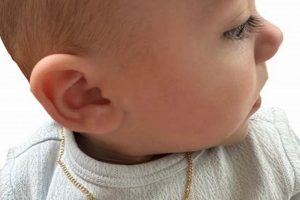
Small, often delicate, necklaces or bracelets specifically designed for infants and young children are the subject of this discussion. These adornments, characterized by their diminutive size and purported safety features, are sometimes given as gifts or keepsakes. An example would be a fine gold necklace presented to a newborn during a christening.
The perceived value of these items varies widely, ranging from symbolic representation of familial bonds and cultural traditions to serving as potential heirlooms. Historically, such adornments have been associated with blessings, protection, and good fortune for the wearer. However, safety concerns and changing societal norms have led to increasing scrutiny and debate surrounding their appropriateness.
The ensuing discourse will examine the potential risks and safety regulations related to infant jewelry, explore cultural perspectives on adornment of young children, and consider ethical implications surrounding the practice. Further, the availability of alternative keepsake options that prioritize child safety will be considered.
Important Considerations Regarding Infant Jewelry
Prior to acquiring or using ornamental jewelry for infants, careful deliberation of safety and ethical implications is paramount. The following points outline crucial aspects to consider.
Tip 1: Assess Material Composition: Ensure the materials are hypoallergenic and free of lead, nickel, and other potentially harmful substances. Verify compliance with relevant safety standards.
Tip 2: Evaluate Structural Integrity: Rigorously inspect the clasp mechanism and chain links for durability and secure closure. Weak points pose a risk of breakage and potential ingestion.
Tip 3: Monitor Wear Under Supervision: Infant jewelry should only be worn under direct adult supervision. Never leave a child unattended while wearing it, particularly during sleep.
Tip 4: Adjust Size Appropriately: The length of necklaces and bracelets must be carefully adjusted to prevent entanglement or choking hazards. Regular adjustments may be necessary as the child grows.
Tip 5: Consider Alternative Keepsakes: Explore alternative commemorative items that do not pose a safety risk to the infant. Photographs, personalized blankets, or memory boxes offer enduring sentimental value without compromising well-being.
Tip 6: Consult Pediatric Professionals: Seek advice from a pediatrician or relevant healthcare provider regarding the potential risks associated with infant jewelry, particularly if the child has pre-existing health conditions or sensitivities.
By meticulously considering these guidelines, responsible decisions can be made that prioritize the safety and well-being of the infant.
The subsequent sections will address the broader cultural context and regulatory landscape surrounding this practice.
1. Safety Hazards Assessment

A comprehensive Safety Hazards Assessment is paramount when considering adornments for infants. The diminutive size and exploratory behaviors characteristic of this age group introduce a heightened risk of injury. A chain, irrespective of material or design, presents potential hazards that necessitate careful evaluation. For instance, the tensile strength of the chain must be assessed to determine the likelihood of breakage under stress. A broken chain can create small parts, posing a choking hazard if ingested.
Further, the length of the chain is a critical factor. Excessively long chains can become entangled around the neck, resulting in strangulation. Documented cases of near-fatal incidents involving infant jewelry underscore the severity of this risk. Even seemingly innocuous materials can pose harm; allergic reactions to certain metals or coatings can cause skin irritation or more severe systemic responses. Therefore, the Safety Hazards Assessment must encompass both mechanical and chemical risks.
In summary, the Safety Hazards Assessment is not merely a precautionary measure, but a fundamental prerequisite for mitigating potentially life-threatening dangers associated with infant adornments. A thorough evaluation, conducted by qualified professionals and documented meticulously, is essential to inform decisions regarding the suitability of such items for infants.
2. Material Toxicity Evaluation

Material Toxicity Evaluation, in the context of adornments for infants, constitutes a critical safety imperative. The developing physiology of infants renders them particularly vulnerable to the adverse effects of toxic substances that might be present in jewelry components. A direct causal relationship exists between the materials used in crafting these items and the potential for harm to the infant wearer. Failure to rigorously evaluate material toxicity can result in a range of adverse health outcomes, from localized skin irritation to systemic poisoning.
The importance of Material Toxicity Evaluation is underscored by real-life incidents involving lead poisoning attributed to children’s jewelry. Lead, a neurotoxin, can leach from jewelry components and be ingested through mouthing behaviors, common among infants. Similarly, cadmium, another toxic heavy metal, has been found in children’s accessories. These metals, even in trace amounts, can disrupt neurological development and impair cognitive function. The consequences of exposure can be long-lasting and irreversible, highlighting the need for stringent testing and certification of all materials used in infant adornments. Furthermore, the presence of phthalates in plastic or rubber components is another area of concern. Phthalates are endocrine disruptors that may interfere with hormonal development.
In conclusion, thorough Material Toxicity Evaluation is not merely an advisory guideline, but a fundamental requirement for protecting infant health. Rigorous testing protocols, adherence to established safety standards, and transparency in material sourcing are essential to mitigate the potential risks associated with infant adornments. The consequences of neglecting this aspect can be devastating, emphasizing the urgent need for comprehensive and proactive Material Toxicity Evaluation in the production and marketing of these items.
3. Cultural Significance Overview

The cultural significance attached to adornments for infants varies considerably across different societies and historical periods. These customs, often deeply ingrained within familial and community traditions, influence the practice of gifting or adorning infants with jewelry, including delicate chains. An understanding of this cultural landscape is essential to contextualize the practice and interpret its multifaceted implications.
- Religious Symbolism
In certain cultures, infant adornments carry religious significance, serving as amulets or talismans believed to offer protection from harm or bring blessings to the child. These items may be bestowed during religious ceremonies such as christenings or naming ceremonies, signifying a spiritual connection and invoking divine favor. For example, a small cross or religious medal might be attached to a fine chain.
- Social Status and Identity
Throughout history, jewelry has served as a marker of social status and familial wealth. Adorning infants with precious metals or gemstones can be a way for families to outwardly display their affluence or signify their social standing within a community. This practice is evident in historical accounts of royal families and aristocratic circles, where infant portraits often feature elaborate jewelry.
- Traditional Practices and Customs
Many cultures maintain specific traditions surrounding infant adornment. These customs may involve the use of particular materials, designs, or styles of jewelry believed to possess special properties or significance. For instance, certain communities may favor specific types of beads or metals thought to ward off evil spirits or promote good health. These practices are often passed down through generations, reinforcing cultural identity and continuity.
- Gift-Giving Rituals
The presentation of infant jewelry is frequently integrated into gift-giving rituals associated with birth or early childhood milestones. These gifts are not merely decorative; they often symbolize affection, good wishes, and the strengthening of familial bonds. The act of gifting a chain to a newborn, for instance, can be viewed as a gesture of love and a tangible expression of hopes for the child’s future.
In conclusion, a comprehensive Cultural Significance Overview reveals the complex tapestry of beliefs, values, and customs associated with adorning infants with chains. These practices, deeply rooted in religious symbolism, social status, traditional customs, and gift-giving rituals, shape the perception and practice of adorning infants with chains across diverse cultures. Understanding these cultural nuances is crucial for navigating the ethical and safety considerations surrounding this practice.
4. Regulation Compliance Scrutiny

The connection between Regulation Compliance Scrutiny and infant jewelry, including chains, is direct and consequential. The absence of rigorous scrutiny in this context can lead to the proliferation of unsafe products in the market, posing significant risks to infant health and well-being. National and international regulations exist to govern the materials used, the structural integrity, and the labeling of children’s products. Regulation Compliance Scrutiny serves as the mechanism by which these regulations are enforced, ensuring that manufacturers adhere to established safety standards.
For instance, the Consumer Product Safety Improvement Act (CPSIA) in the United States sets limits for lead content in children’s products. Regulation Compliance Scrutiny involves testing jewelry samples to verify adherence to these limits. Failure to comply can result in product recalls, financial penalties, and reputational damage for the manufacturer. In the European Union, the REACH regulation addresses the use of chemicals in consumer goods, including jewelry. Similar testing and certification processes are required to demonstrate compliance. These examples illustrate the practical application of Regulation Compliance Scrutiny, highlighting its role in safeguarding infants from exposure to harmful substances. The effectiveness of these regulations, however, hinges on consistent and rigorous enforcement.
In conclusion, Regulation Compliance Scrutiny is not merely a bureaucratic exercise; it is a critical component of ensuring the safety of infant jewelry. The consequences of inadequate scrutiny can be severe, potentially leading to irreversible harm to vulnerable infants. Continuous improvement in testing methodologies, stricter enforcement of existing regulations, and increased public awareness are essential to minimize the risks associated with these products.
5. Alternative Keepsake Options

The pursuit of meaningful keepsakes to commemorate infancy is a common practice. However, concerns regarding safety associated with items like infant jewelry, specifically “baby chains,” necessitate exploration of viable and safer alternatives. These options offer enduring sentimental value without compromising the child’s well-being.
- Personalized Photo Albums and Scrapbooks
Photo albums and scrapbooks provide a tangible medium for preserving visual memories. These can be customized with photographs, handwritten notes, and mementos from the child’s early years. Unlike “baby chains,” which present safety hazards, photo albums pose no risk to the infant and can be revisited and enjoyed throughout their life. The act of creating a scrapbook can also be a cathartic and meaningful experience for parents.
- Custom-Made Artwork and Portraits
Commissioning a portrait or other artwork of the infant offers a unique and enduring tribute. This can range from a traditional oil painting to a contemporary digital illustration. Unlike potentially harmful jewelry, artwork serves as a visual representation of the child’s likeness and can be displayed prominently in the home. The artwork can also capture the essence of the child’s personality or a significant moment in their early life.
- Memory Boxes and Time Capsules
Memory boxes or time capsules allow for the preservation of tangible mementos and significant items from the child’s infancy. These may include clothing, toys, letters, and other items that hold sentimental value. Unlike “baby chains,” which are worn on the child’s person and pose a safety risk, memory boxes are stored securely and can be opened at a later date to evoke memories of the past. The act of curating a memory box can also be a way for parents to reflect on their child’s early development.
- Digital Keepsakes and Online Journals
In the digital age, online platforms offer alternative avenues for preserving memories. Digital photo albums, online journals, and social media platforms allow for the sharing and storage of photographs, videos, and written accounts of the child’s early years. Unlike tangible items, digital keepsakes are less susceptible to physical damage or loss. They also offer the opportunity for family and friends to connect and share in the child’s milestones, serving as a long-lasting alternative to “baby chains.”
These alternative keepsake options provide meaningful and safe ways to commemorate infancy, offering enduring value and sentimental connection without the inherent risks associated with jewelry. The selection of an alternative is often driven by personal preference and cultural context, ultimately prioritizing the child’s safety and well-being above potentially hazardous adornments.
Frequently Asked Questions
The following section addresses frequently asked questions pertaining to ornamental chains intended for infants. These answers aim to provide objective information regarding safety, risks, and alternatives.
Question 1: What are the primary safety concerns associated with baby chains?
The primary safety concerns include choking hazards from small parts, strangulation risks from the chain length, and potential allergic reactions or toxicity from the materials used in construction.
Question 2: Are there any circumstances under which baby chains are considered safe?
No circumstance can guarantee complete safety. Constant, direct adult supervision is paramount if such an item is used. Even with supervision, inherent risks remain.
Question 3: What materials are considered unsafe for baby chains?
Materials containing lead, cadmium, nickel, or phthalates are considered unsafe. Additionally, any material that can cause an allergic reaction in the infant should be avoided.
Question 4: What regulations govern the sale and manufacture of baby chains?
Regulations vary by region. In the United States, the Consumer Product Safety Improvement Act (CPSIA) sets standards for lead content. The European Union has similar regulations under REACH. Manufacturers are responsible for adhering to these standards; however, enforcement and compliance can vary.
Question 5: What are some safer alternatives to baby chains for commemorating infancy?
Safer alternatives include personalized photo albums, custom artwork, memory boxes containing soft items, and digital keepsakes. These options provide sentimental value without posing direct physical risks to the infant.
Question 6: Should a parent consult a medical professional before using a baby chain?
Consultation with a pediatrician is strongly recommended. A medical professional can provide personalized advice based on the infant’s individual health status and potential sensitivities.
The information provided clarifies the inherent risks associated with “baby chains” and offers safer alternatives for commemorating infancy. Prudence and prioritization of infant safety are of utmost importance.
The subsequent section will delve into resources for further information and support.
Concluding Remarks Regarding Infant Adornment
The preceding exploration has illuminated the multifaceted considerations surrounding baby chains. Emphasis has been placed on the inherent safety hazards, including choking and strangulation risks, as well as the potential for material toxicity. Furthermore, the discussion has underscored the importance of adhering to regulatory standards and exploring alternative keepsake options that prioritize infant well-being. Cultural perspectives, while acknowledged, do not supersede the paramount importance of child safety.
The information presented serves as a call to informed decision-making. Careful consideration of the potential risks associated with baby chains is essential. Future discourse and regulatory actions should prioritize the establishment of stricter safety standards and the promotion of awareness regarding safer alternatives. The ultimate goal must remain the safeguarding of infants from preventable harm.